


Confirm the Material List Before Cutting
Capzorva coordinates material preparation with suitable production partners for apparel brands, importers and distributors sourcing baseball caps. Preparation covers the visible fabric and the internal components that influence shape, fit and assembly.
The starting point is the approved sample and written specification. Confirm the crown fabric, brim covers, front support where required, brim insert, sweatband, seam binding, closure and labels. Quantities should be separated by style and colour so component requirements can be reviewed accurately.
Any proposed substitution needs confirmation before use. Similar appearance alone does not establish that two materials will produce the same finished cap.
Match the Outer Fabric to the Construction
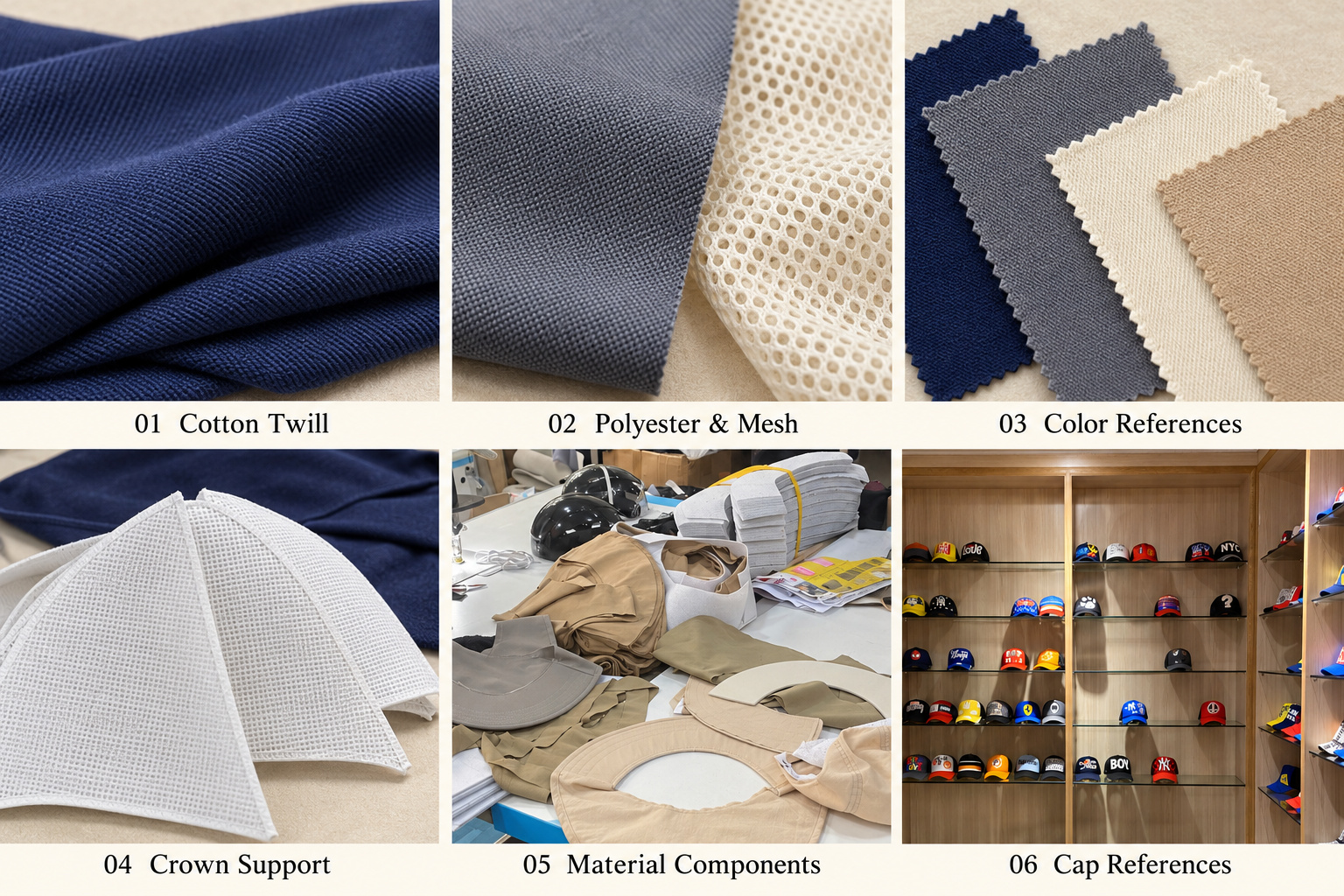
Cotton twill, polyester fabrics and mesh have different handling characteristics. Fabric weight, weave, thickness and stretch can influence crown shape, seam appearance and how decoration sits on the surface.
Review the intended construction alongside the cap fabric and material selection. A soft crown and a supported front may require different preparation even when their outer fabrics look similar.
Material should be checked for visible flaws, uneven texture and differences between supplied lengths or rolls. Where relaxation is needed before cutting, the preparation method should suit the fabric. Performance claims require supporting evidence for the actual selected material.
 Establish Physical Colour References
Confirm colour using an agreed physical reference wherever possible. Screen images help communicate a direction, but lighting, display settings and surface texture can change the perceived shade.
Crown fabric, mesh, sewing thread and adjustment straps may show differences even when intended to match. Review these components together rather than approving each from a separate photograph.
Materials from different dye lots should remain identifiable during preparation. Where shade variation is visible, agree how it will be handled before panels are cut. Record which reference applies to each colour version and whether any sample material differs from the intended production supply.
Prepare Support Materials, Inserts and Trims
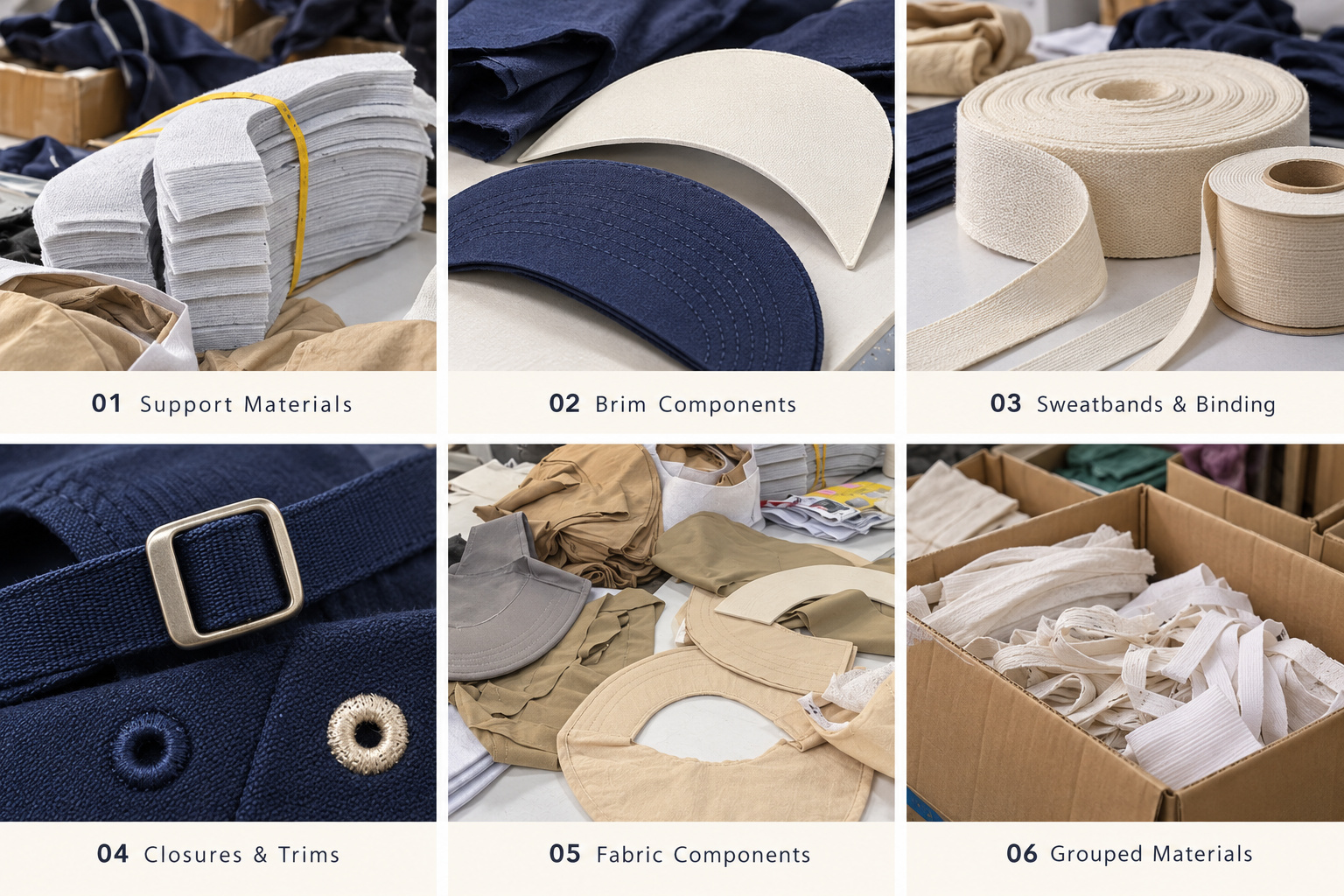
Front-panel support should suit the required crown structure without creating excessive stiffness or bulk at seams. Brim inserts need the agreed profile, thickness and handling characteristics so the finished brim follows the approved sample.
Sweatbands and seam tapes affect internal finishing. Their width, thickness and attachment allowance must work with the pattern and assembly method. Closure straps, buckles and other accessories need matching dimensions and compatible attachment details.
Labels should arrive in the correct version, fold and orientation. Component quantities must account for the order breakdown, with any shortages or mismatches resolved before the relevant operation begins.
 Check Decoration Compatibility and Sample Differences
Embroidery and printing should be reviewed on the intended production fabric. A proof made on a substitute cloth may not reveal the same puckering, coverage or surface appearance.
Confirm the backing, support and processing requirements before decoration begins. If a material changes after sample approval, assess whether another proof or complete sample is needed.
The sample development process should identify any temporary materials clearly. Approval records need to distinguish the accepted production specification from early development alternatives.
Release Materials for the Agreed Order
Material readiness affects cutting, decoration and assembly timing. Special colours, less common trims and separate branding components may have different availability and minimum quantities.
Before release to fabric cutting, confirm material identity, colour allocation, component specifications and sufficient quantities. Keep materials grouped and identified to reduce mixing between versions.
For a project review, send your cap reference, fabric preferences, colour standards, component requirements, quantities by style and colour, destination and target delivery date. We can then review sourcing requirements, sample needs and the proposed preparation schedule.