


Define the Logo Before Production
Logo processing affects how a baseball cap represents a brand across an entire order. For headwear brands, importers and distributors, the main decisions include decoration method, finished dimensions, placement and appearance on the selected fabric.
We coordinate these details against the artwork, cap construction and sample reference. A digital preview helps establish direction, but the physical result also depends on fabric texture, crown support, seams and access to the decoration area.
For OEM orders, send the original artwork together with the intended logo width, colour references and placement. Identify any details that must remain legible, especially small lettering, narrow gaps and fine outlines.
Prepare Artwork for the Selected Method
Embroidery requires a stitch file developed for the design and its intended application. Simply resizing an existing file may change stitch density, lettering clarity and the way the fabric responds.
Before sampling, fine details may need adjustment. Small text can close up, closely spaced elements can merge, and large filled areas can make lightweight panels feel stiff. Any proposed artwork changes should be confirmed before the trial is produced.
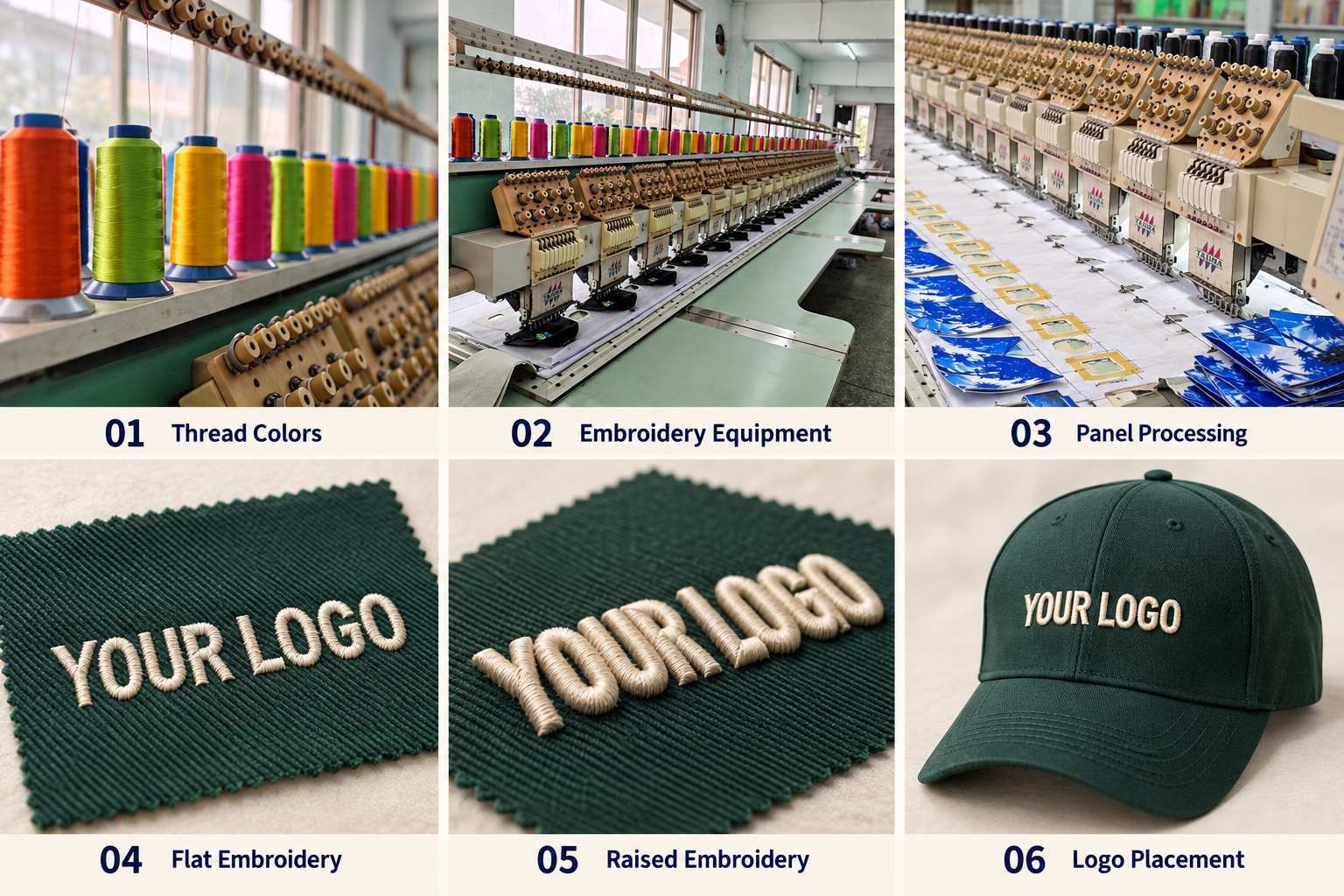
Flat embroidery and raised embroidery also require different preparation. Raised effects suit suitable shapes and lettering; they should not be assumed feasible for every design. The available approaches are explained on our logo and embroidery options page.
 Match Thread and Backing to the Fabric
Thread colour should be reviewed using physical references where colour accuracy matters. Screen images alone cannot establish an exact match, and thread sheen can make the same colour appear different from the surrounding fabric.
Backing and stitch settings need to suit the material and design. Soft cotton, structured front panels and open mesh do not respond identically. Excessive stitch density or unsuitable support can contribute to puckering, distortion or an uncomfortable interior finish.
The trial should therefore use the intended fabric, or clearly identify any substitute material and the limitations of that comparison.
Confirm Placement and Processing Sequence
Logo placement needs a defined reference point. Front-centre decoration, side logos and rear lettering should be checked against panel seams, the brim connection, eyelets and the rear opening.
Decoration may take place on flat panels or on an assembled cap, depending on the design, location and production method. The sequence should be agreed before processing starts because it affects access, alignment and handling.
For patches and printed designs, the confirmation points differ. Edge finish, attachment method, print coverage and material compatibility require separate review through our patches and printing options.
Approve the Physical Sample
Review the sample for logo dimensions, position, thread colours, lettering clarity and the surrounding fabric condition. Check the reverse side for backing appearance and any finish that could affect comfort.
Photographs can support review, but lighting and viewing angle may hide raised details or surface distortion. Where these features are important, a physical sample provides a better reference.
Record revisions clearly and identify the version approved for production. Our cap sample development process connects decoration approval with the complete cap’s fit and construction.
 Check Consistency and Protect the Decoration
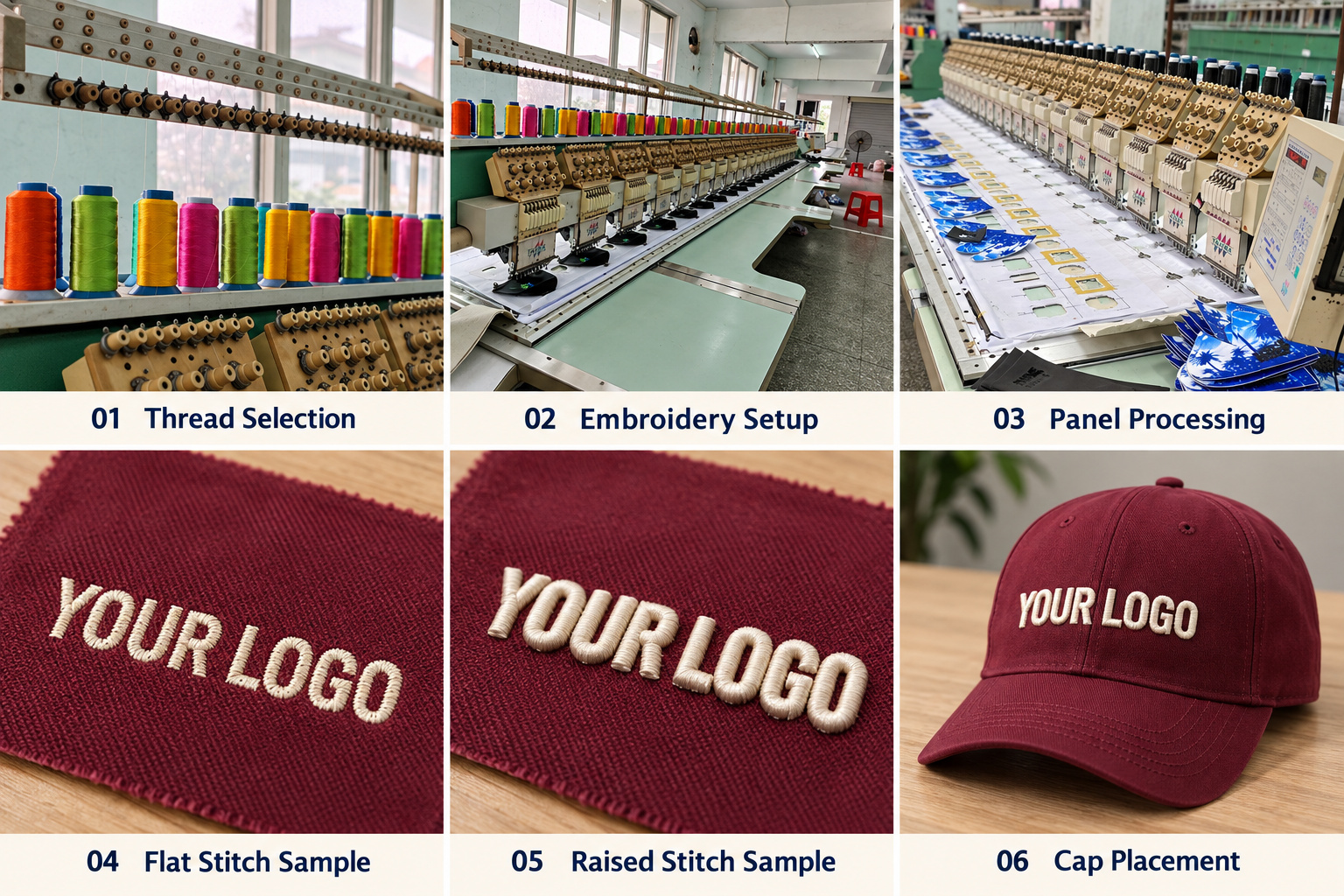
Production checks should compare the decoration with the agreed sample, including orientation, colour sequence, loose threads, missing stitches and visible puckering. Placement should also be reviewed after assembly, when seams and crown shape establish the final appearance.
Packing needs to suit the decoration. Raised embroidery should avoid unnecessary compression, while patches and printed surfaces need protection from rubbing against hardware or adjacent caps.
Artwork complexity, decoration locations, colour changes and sample revisions can affect cost and scheduling. Send these details with the quantity breakdown and required delivery date so feasibility, sample charges and production timing can be reviewed together.