


Establish the Sewing Reference
Panel sewing joins the cut fabric pieces that form a baseball cap’s crown. For headwear brands, importers and distributors, this stage affects crown shape, seam appearance and consistency across an order.
We coordinate sewing requirements against the agreed construction and sample reference. Panel count, fabric combination, crown support and visible stitch details need to be settled before production. A soft cotton crown and a structured front require different handling, even when their finished dimensions are similar.
For OEM projects, provide a reference sample or clear construction images alongside the size specification. Identify any seams, thread colours or internal finishes that must match.
Match Cut Panels Before Joining
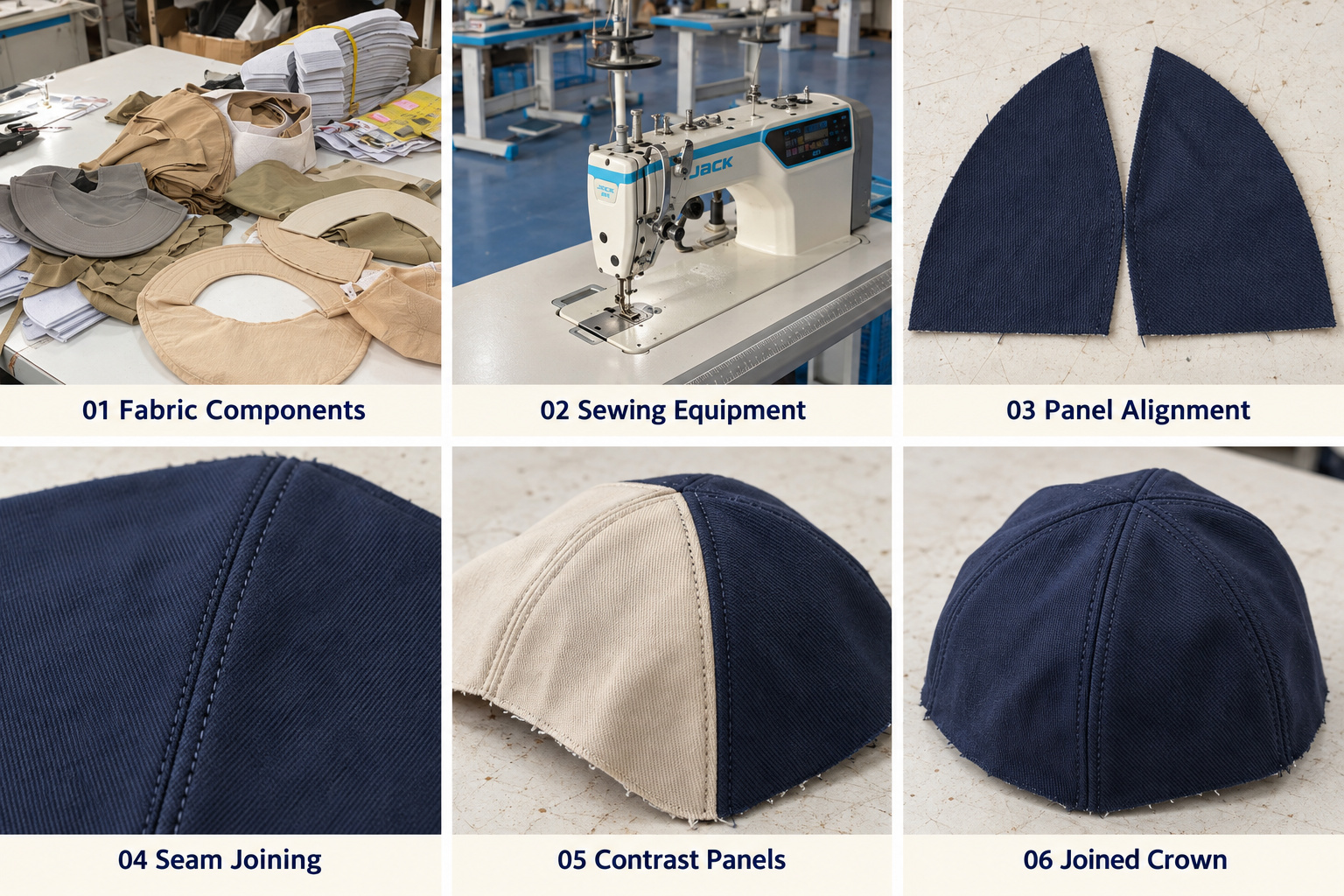
Corresponding panel edges should match before stitching begins. Differences in shape, grain direction or seam allowance can create problems that sewing alone cannot correct.
Panels need to remain grouped by style, size, colour and material batch. On contrasting designs, the sewing reference should clearly show which fabric belongs at the front, sides and rear.
The preparation established during fabric cutting helps maintain this identification. Where panels arrive with embroidery or printing, their orientation also needs checking before they are joined.
 Control Seam Allowance and Stitch Tension
A consistent seam allowance helps the joined panels follow the intended pattern. Uneven allowances can change crown proportions or make adjacent seams meet poorly.
Thread tension, needle choice and stitch settings should suit the material combination. Excessive tension can draw lightweight fabric into puckers, while unsuitable settings may leave loose stitches or an uneven seam. Mesh and dense twill require particular attention when joined together because they handle differently.
Checks should consider the fabric around the stitching as well as the stitch line itself. Needle damage, stretched edges and trapped folds can remain visible after finishing.
Keep Visible Stitching and Decoration Aligned
Topstitching, where specified, should follow the agreed distance from the seam and maintain a consistent appearance. Contrasting thread makes small variations more noticeable, so its colour and layout belong in the sample confirmation.
Decorated panels require careful handling. A logo positioned correctly on a flat piece may appear off-centre if the adjoining seam is uneven or the panel is pulled during sewing.
The confirmed embroidery and logo processing reference should therefore be reviewed alongside the sewing construction. Seams should not unintentionally catch lettering, patch edges or areas intended to remain visible.
Confirm the Internal Seam Finish
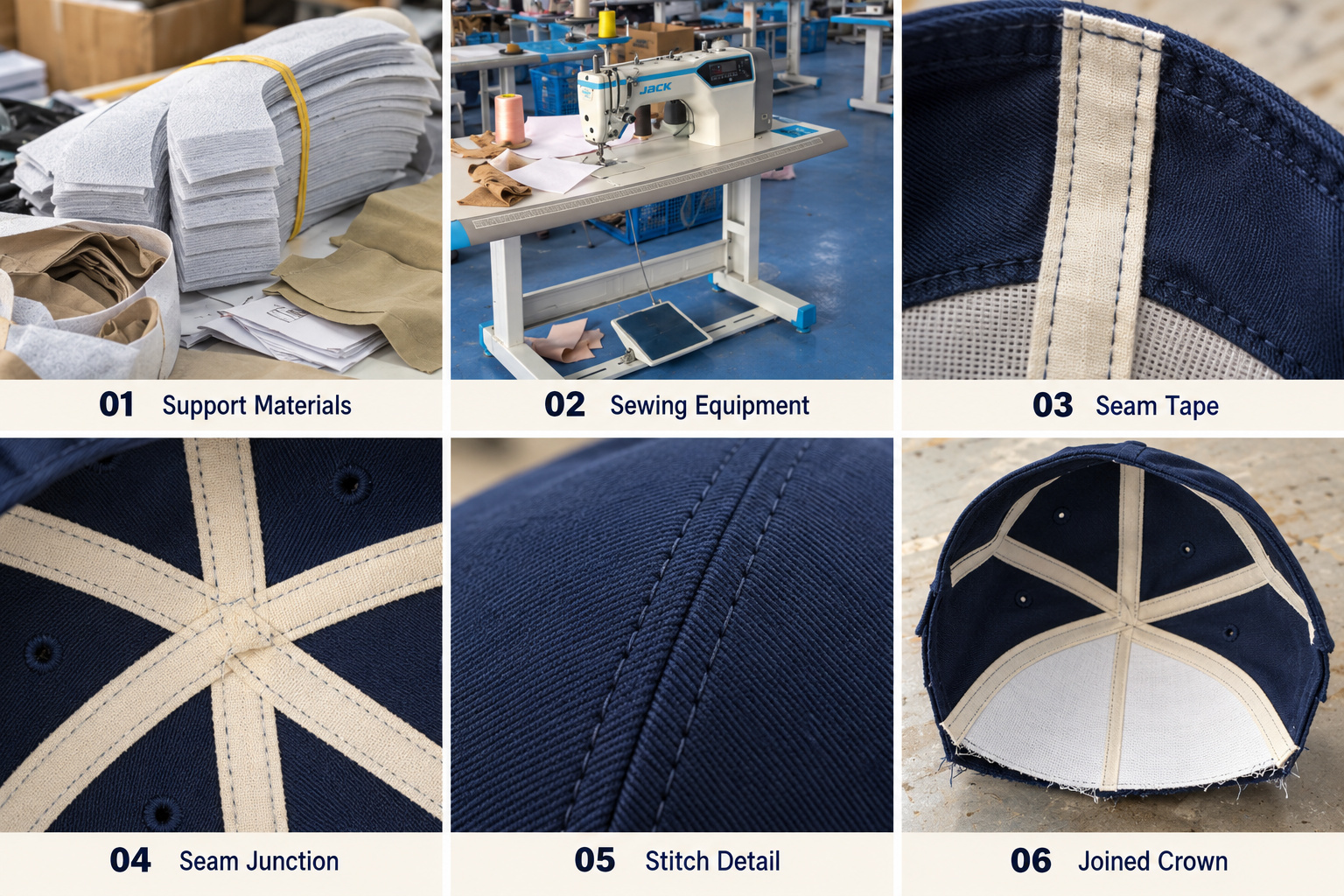
Internal seams influence appearance and comfort. Where seam tape is specified, its width, colour and coverage should suit the construction without adding unnecessary bulk.
Support material must remain correctly positioned within structured panels. Exposed edges, twisted tape or bulky seam intersections can affect the interior finish and how the crown takes shape.
An inside view of the sample is useful during approval. Front photographs alone do not show the seam treatment, backing position or thread ends.
 Review Joined Panels Before Crown Assembly
Checks at this stage should cover seam alignment, skipped stitches, loose threads, puckering and agreement with the construction reference. Joined sections should be compared without stretching them into shape.
Problems should be addressed before further crown assembly makes the affected area harder to access. Finishing cannot reliably correct an incorrectly joined panel.
Share Construction Details for Order Planning
Send the panel layout, fabric choices, size breakdown, thread colours and decoration positions with the expected quantity. Include clear interior photographs if a particular seam finish is required.
Material combinations, additional topstitching and sample revisions can affect labour, cost and preparation time. MOQ and production timing should be confirmed after these details are reviewed. Packing arrangements should also protect the agreed crown shape once assembly and finishing are complete.