


Select Components Around Fit and Construction
Capzorva Baseball Cap coordinates closure and accessory selection for apparel brands, importers and wholesale buyers through cooperating production partners. We review components against the cap design, intended fit and order quantity before confirming available options.
Send a reference cap, component photographs or a specification sheet. Identify whether you need to change the adjustment method, hardware finish, sweatband, eyelets or top button. A replacement component can affect attachment methods and finished measurements, so it should be assessed as part of the complete cap.
Compare Closure Types and Adjustment Details
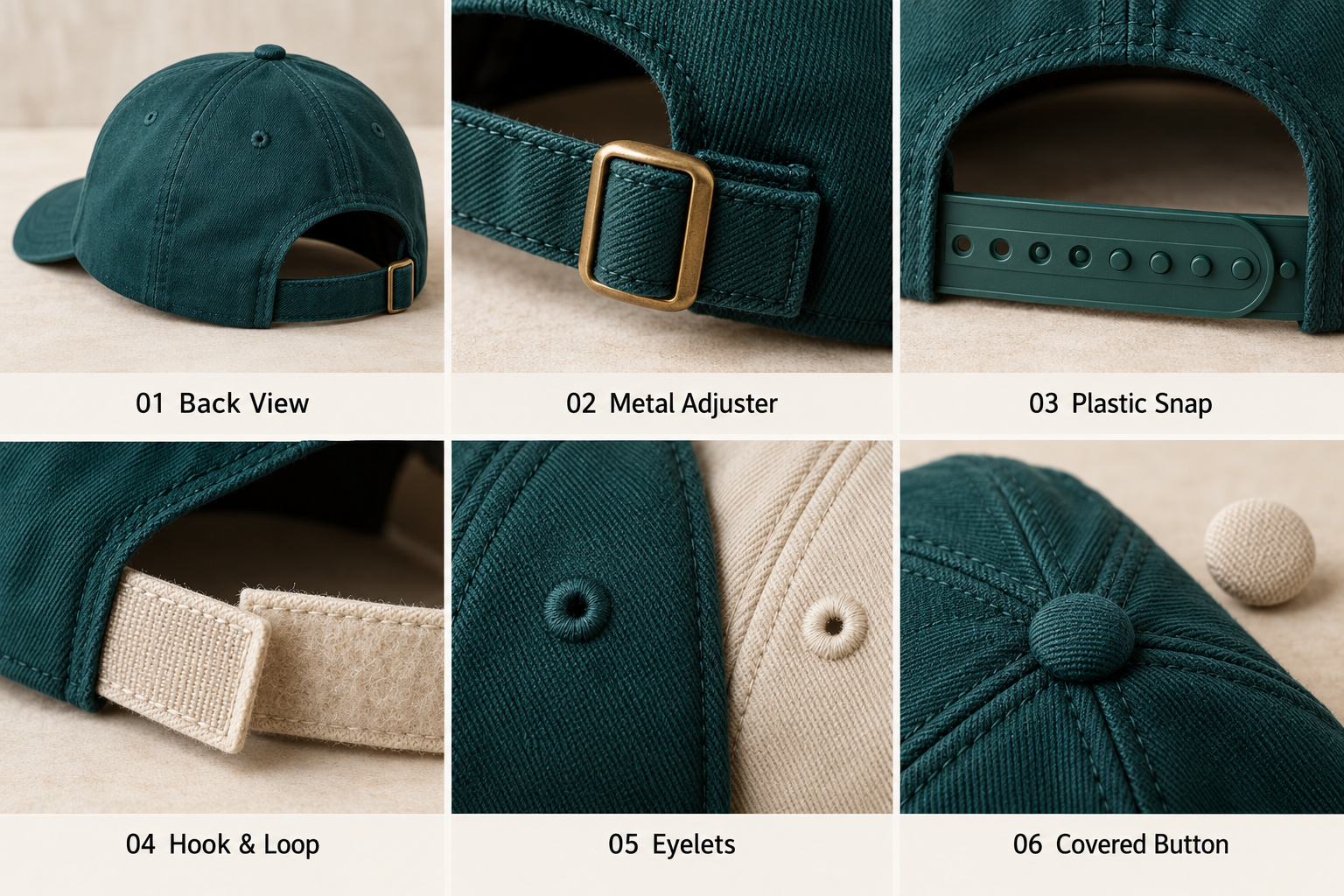
Options for review include fabric straps with metal adjusters, plastic snap closures and hook-and-loop straps, subject to the selected style and production route. Each requires a suitable rear opening, attachment position and strap arrangement.
For fabric straps, specify width, usable length, buckle style and how the loose end should be retained. For plastic snaps, confirm the mating parts, adjustment positions and fastening feel. Hook-and-loop designs need sufficient overlap at the agreed settings. Review the usable range through our cap sizes and fit process rather than assuming every adjustable closure fits the same wearer range.
 Coordinate Hardware, Eyelets and Top Buttons
Hardware review should cover dimensions, finish, visible edges and compatibility with the strap material. A buckle that looks suitable in a photograph may be difficult to operate with a thicker fabric strap. Confirm the assembled result before approval.
Eyelets and top buttons should suit the panel construction and visual design. Specify embroidered or metal eyelets where required, together with placement and color references. Metal finishes, plastic shades and fabric-covered parts may appear different even when intended to coordinate. We review the proposed components together rather than promising an identical appearance across different materials.
Confirm Sweatbands and Interior Components
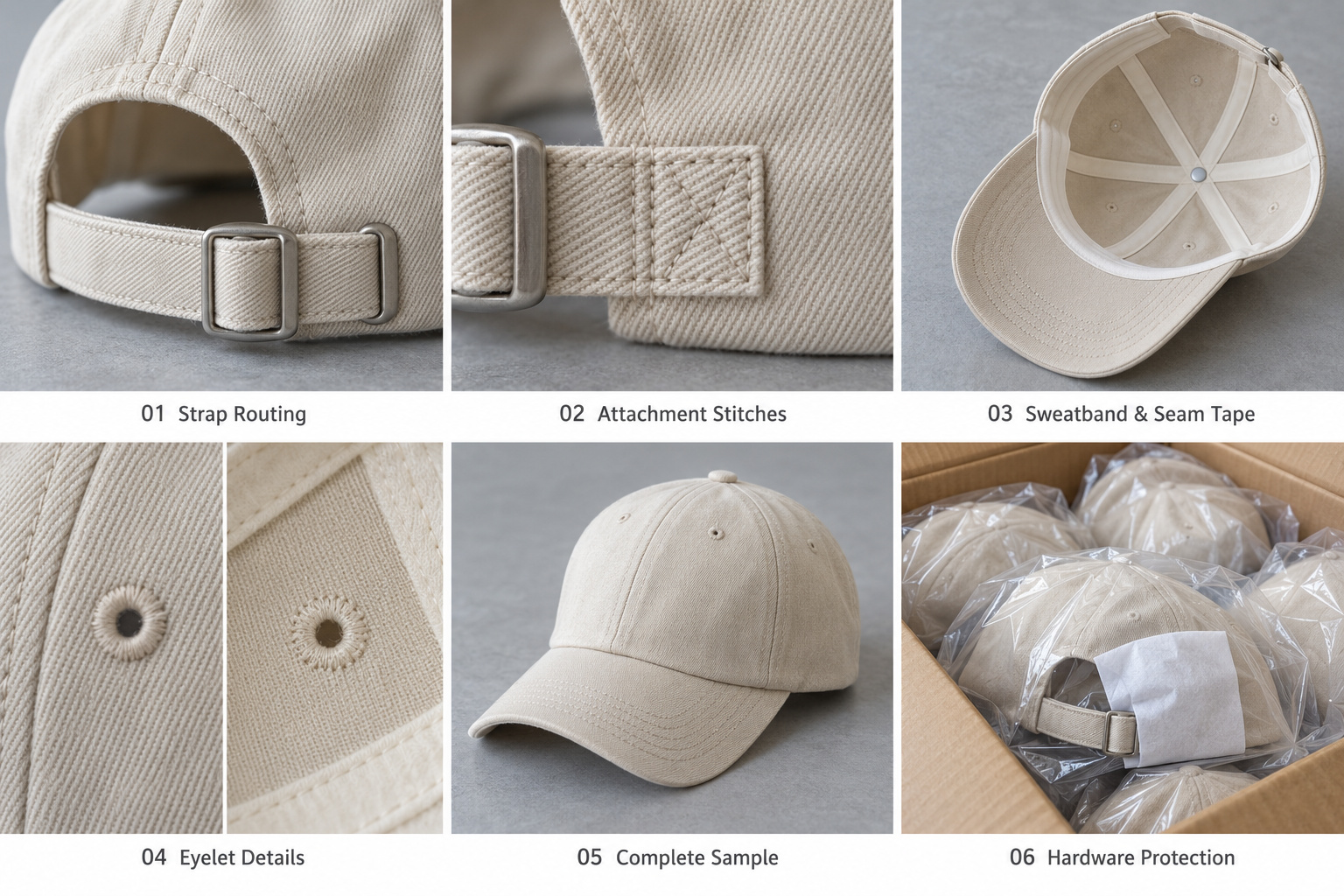
Sweatband width, thickness and attachment influence the finished opening and the feel against the forehead. Seam tapes and labels also need suitable positions so they do not interfere with the adjustment mechanism or create unnecessary bulk.
Provide material references and any destination-specific requirements early. For children’s caps, identify the intended wearer group and applicable component requirements before sampling. Safety or performance testing must be separately specified and agreed; component appearance alone does not establish compliance.
 Approve Components on a Complete Sample
Loose accessories help confirm appearance, but the complete sample establishes fit, operation and attachment. Check closure movement, strap retention, fixing stitches and contact with the wearer. Record the approved component version, finish and placement through cap sample development.
Special hardware, separately sourced trims and additional colors can affect MOQ, sample charges and preparation time. Provide quantities per style and color. Production timing is confirmed after component availability, sample approval and order terms have been reviewed.
Check Attachment and Protect Components During Packing
Agreed inspection points can include closure operation, mating-part alignment, strap routing, fixing stitches, eyelet attachment and visible hardware defects. Any required pull tests or laboratory checks need defined methods and acceptance criteria. See our quality inspection page for order-specific arrangements.
Packing should prevent buckles and other hard parts from pressing into adjacent caps or marking decoration. Send your cap reference, preferred components, adjustment requirements, quantities and destination so we can review feasibility and prepare the applicable quotation.