


Define the Cap Before Production Begins
Capzorva coordinates baseball cap manufacturing through suitable production partners for apparel brands, importers and distributors. Each project starts with a confirmed construction, material list and approved sample rather than a general product photograph.
Specify the panel layout, crown profile, structured or unstructured front, brim shape and rear closure. Include fabric, colours, measurements, artwork and quantities by version. These details determine the processing sequence and establish a consistent reference for production.
Sample costs, MOQ and scheduling are reviewed against the actual specification. Changes to fit or construction should be settled before materials are released for production. Any difference between the sample and written instructions needs clarification before work proceeds.
Prepare Materials and Cut the Components
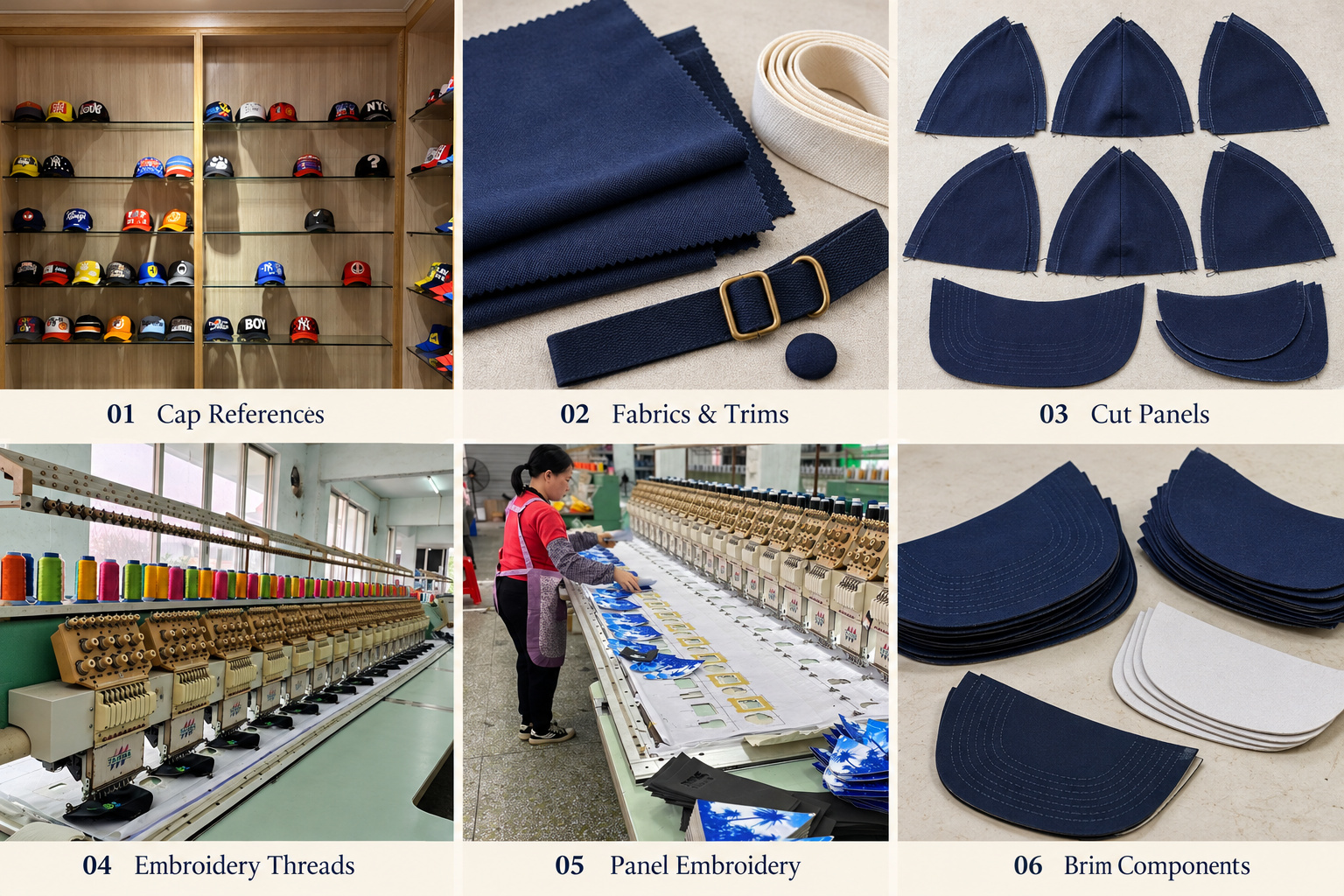
The material list covers crown fabric, brim covers, support materials where required, brim inserts, sweatbands, seam tapes, closures and labels. Availability and colour references need confirmation before cutting.
Crown panels are cut to the agreed pattern with allowances for joining. Grain direction and consistent panel dimensions affect how the assembled crown sits. Brim covers must accommodate the selected insert without pulling or leaving excess fabric.
The fabric cutting stage also needs to account for decoration placement. Artwork close to a seam requires enough clearance for both processing and assembly.
 Process Logos and Sew the Crown
Embroidery, patches or printing are positioned according to the approved artwork. Where suitable, decoration is processed on flat panels before they are joined. The selected fabric, front support and seam position can affect the finished result.
A separate stitch or print proof confirms decoration details, while the assembled cap shows placement on the curved crown. Review the appropriate embroidery and logo processing requirements before production.
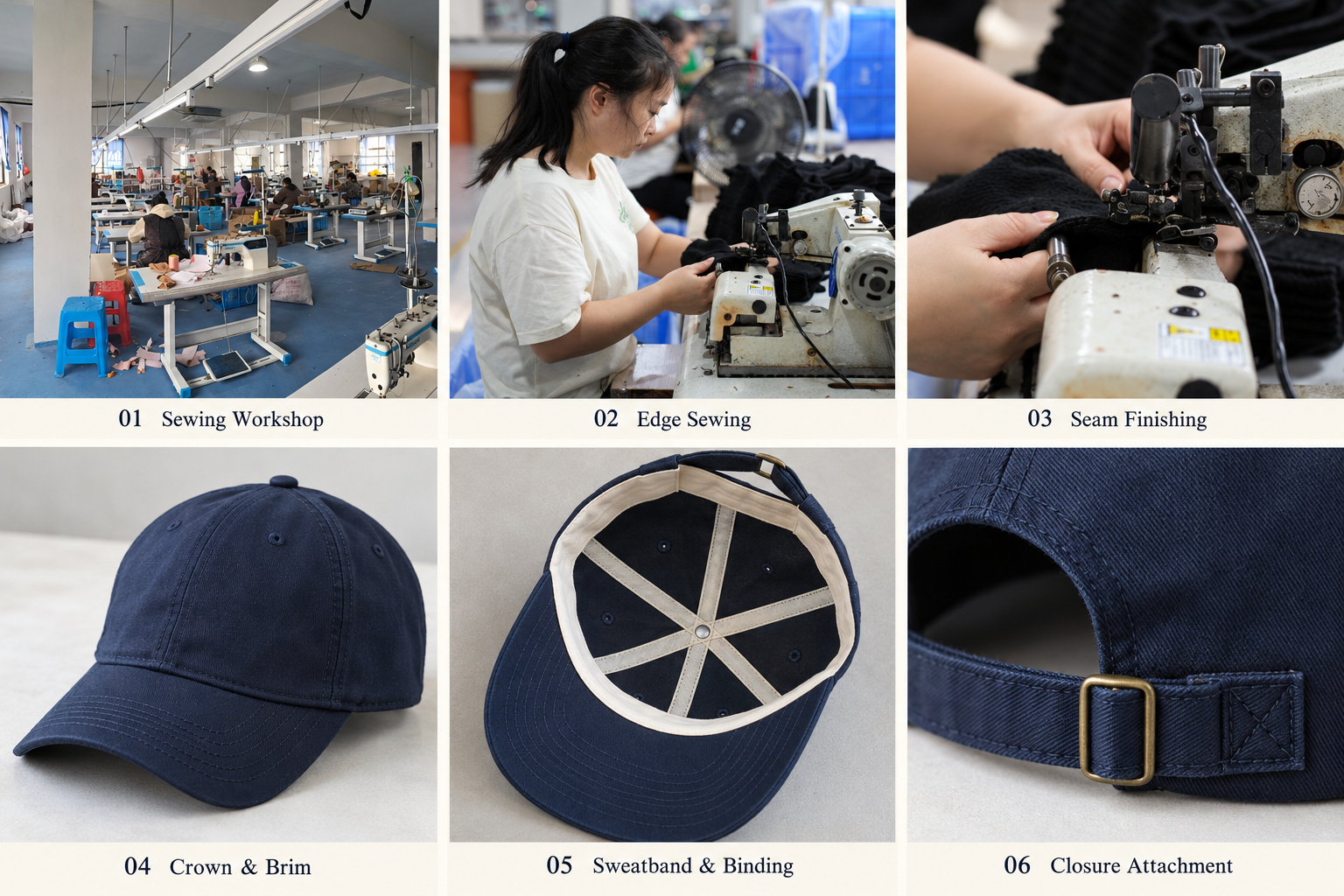
Panel sewing then establishes crown depth and symmetry. Uneven joins, inconsistent seam allowances or fabric tension can change the profile. Internal seam binding covers joined edges, with eyelets and the top button incorporated according to the construction.
Attach the Brim, Sweatband and Closure
The brim insert, fabric covers and stitch rows work together to produce the approved shape. Alignment at the crown connection affects whether the brim sits centrally and evenly. Flat and curved profiles should follow the sample rather than being adjusted during packing.
Sweatband attachment influences the finished opening and internal comfort. Labels should face the agreed direction, with secure stitching and no unnecessary bulk at their attachment points.
Rear closures require the correct strap direction, positioning and fastening method. Check the adjustment function on the complete cap. A closure that looks correct in a component photograph may behave differently after attachment.
 Shape, Finish and Check the Complete Cap
Finishing includes trimming loose threads, cleaning visible marks and shaping the cap as appropriate to its materials. The method must suit the crown support, brim insert and decoration.
Compare the complete cap against the approved sample for crown profile, symmetry, brim alignment, logo appearance and internal workmanship. Measurements should follow the agreed method and tolerances. Confirm that the correct labels and closure components have been used for each version.
Inspection scope and acceptance criteria need confirmation before production. Any third-party inspection or laboratory testing is arranged separately. Required corrections should be addressed before the goods move to final packing.
Pack for Handling and Delivery
Packing should protect the cap’s approved form. Structured crowns may need support or spacing, while soft caps require an agreed folding or nesting arrangement. Raised logos, patches and metal closures should be protected from pressure and rubbing.
Confirm individual bags or boxes, carton quantities, assortment and markings. The packaging and export preparation stage follows these instructions, with final carton dimensions and weights supporting transport planning.
For a project review, send your cap reference, specifications, artwork, quantities by style and colour, packing requirements, destination and target delivery date. We can then review the sample scope, production route, MOQ and proposed schedule.