


Confirm the Pattern Before Cutting
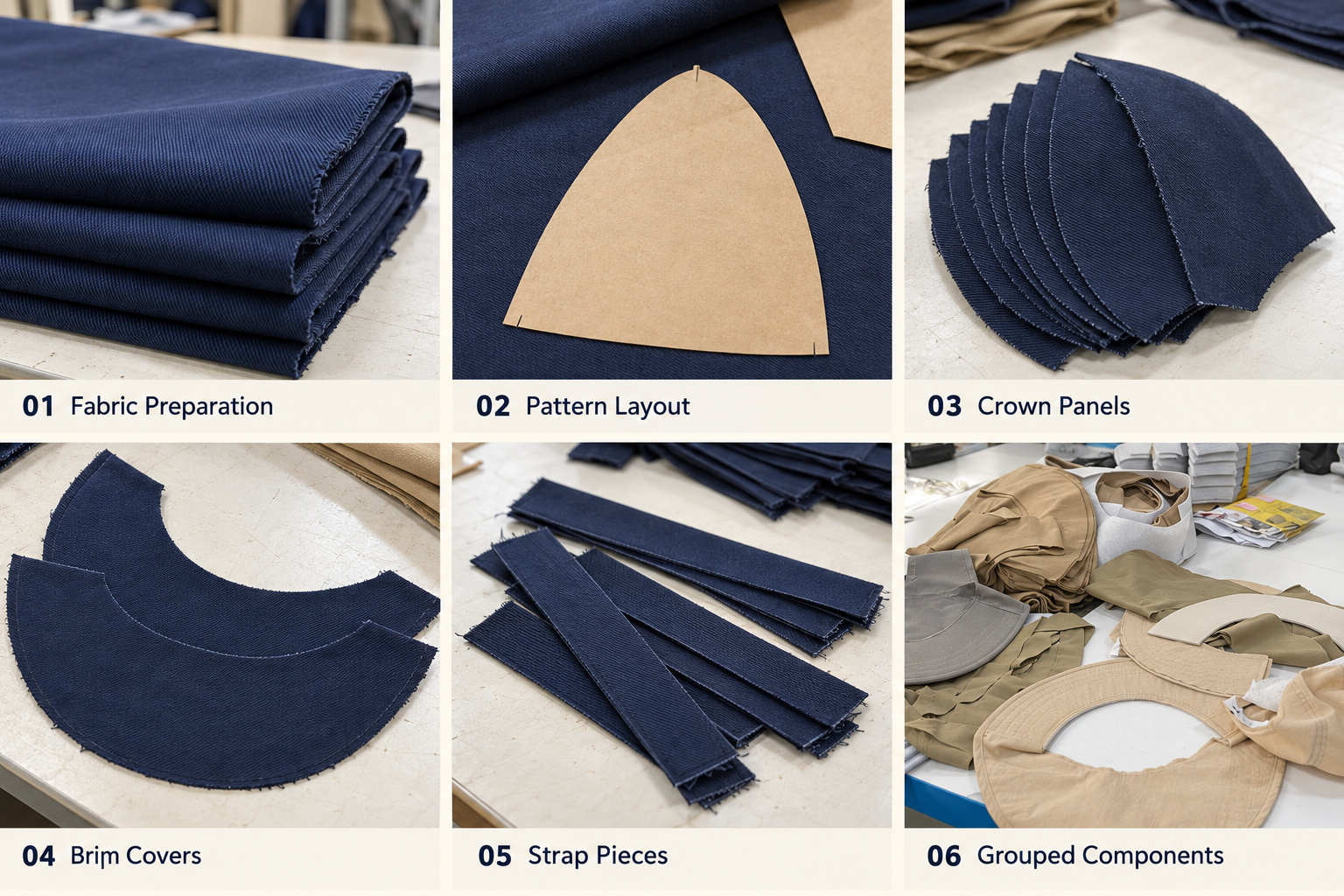
Fabric cutting establishes the shapes that sewing must bring together. For brands, importers and distributors, an incorrect panel shape can affect crown depth, seam alignment and finished fit even when the fabric matches the approved sample.
We coordinate cutting requirements against the agreed cap construction, size specifications and sample reference. The pattern needs to identify crown panels, brim covers, closure straps and any other fabric components required for the order.
For OEM projects, changes to crown height, panel count or rear opening should be resolved before bulk fabric is cut. A photograph can communicate appearance, but it does not replace confirmed dimensions and a physical sample.
Prepare Fabric for Consistent Panel Shapes
Fabric should be laid without unnecessary tension or distortion. Cotton twill, polyester and mesh behave differently during handling, so the preparation method needs to suit the selected material.
Before cutting, the relevant checks include fabric face, grain direction, visible defects and usable width. Where relaxation is needed, it should be allowed before the cutting layout is finalised. Stretching material to fit a layout can produce panels that change shape after cutting.
Material readiness also depends on the colour references and components established during fabric and material preparation.
 Control Panel Direction and Seam Allowances
Panel orientation affects both appearance and assembly. Twill lines, directional textures and printed designs need a consistent cutting direction where specified. On mesh panels, orientation can also influence how the pieces handle during sewing.
Seam allowances must match the intended construction. Inconsistent allowances can make otherwise correct panels difficult to join and can shift the finished crown shape.
For multi-panel caps, corresponding pieces should be checked for matching edges and assembly points. Contrasting front, side and rear panels also need clear identification so that colours are assembled in the correct positions.
Cut Brim Covers and Smaller Components
Brim covers need to match the selected insert, finished outline and sewing allowance. A cover that is too small may pull against the insert; excessive fabric can create wrinkles around the edge.
Upper and lower brim fabrics should be identified separately when their colours differ. Closure straps and other narrow pieces also require attention to width, direction and the amount of fabric needed for folding.
These details should follow the confirmed cap structure and brim requirements. A change from a curved brim to a flat brim should be reviewed before reusing an existing cutting pattern.
Keep Colours and Order Components Together
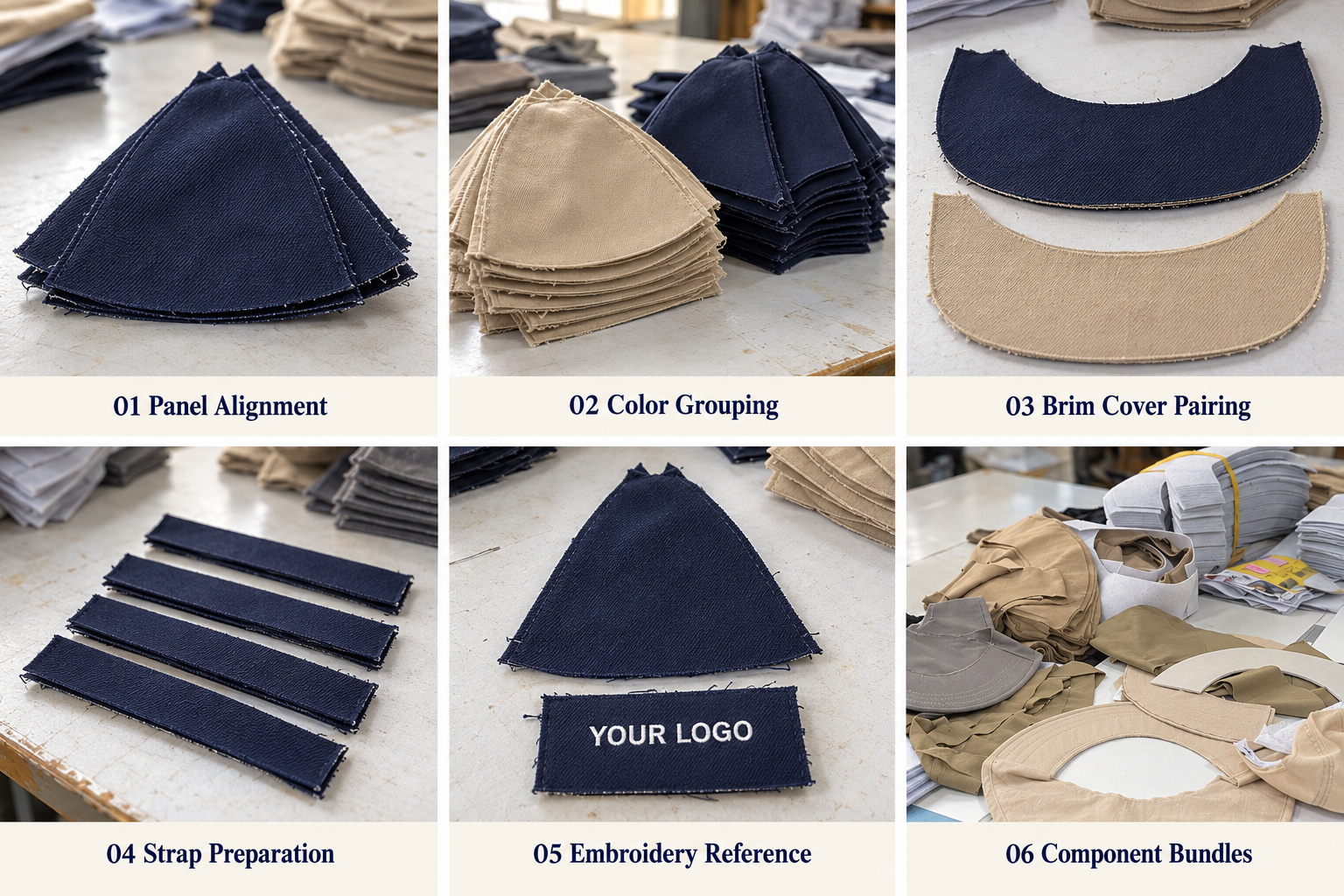
Cut pieces need to remain identifiable through decoration and sewing. Grouping by style, colour, size and fabric batch helps reduce mixing between similar-looking materials.
Where embroidery or printing takes place on flat panels, the cutting and decoration sequence should be agreed for that design. Placement references must account for the seam allowance and the area that will remain visible after assembly.
 Check Cut Pieces Before Sewing
Checks at this stage focus on shape, edge condition, component count and agreement with the pattern. Misaligned layers or visibly distorted pieces should be addressed before they move into assembly.
The first production pieces should be compared with the agreed reference where appropriate. Broader workmanship checks continue during quality inspection; cutting checks alone cannot confirm the finished cap’s fit or appearance.
Share the Details Needed for Production Planning
Send the cap reference, panel construction, fabric choice, colour breakdown, size requirements and expected order quantity. Include any directional print, contrasting underbrim or special rear-opening detail.
Pattern revisions, material availability and the number of colour combinations can affect preparation time and fabric usage. These points should be reviewed before the production schedule is confirmed.