


Confirm the Closure Before Assembly
The rear closure connects adjustment function with the cap’s finished fit and appearance. For headwear brands, importers and distributors, its construction affects how the cap adjusts, how securely the setting holds and how the back looks.
We coordinate attachment details against the approved sample and specification. Closure type, strap material, colour, attachment position and rear-opening shape need to be reviewed together.
For OEM projects, send a reference cap or clear rear and interior photographs. A buckle photograph alone does not establish strap compatibility, reinforcement or the intended adjustment range.
Match Straps and Hardware
Fabric straps must suit the buckle’s usable opening and threading method. A strap that is too thick may be difficult to adjust; one that is too narrow may sit unevenly or move excessively within the hardware.
Folded ends, strap thickness and any tail-storage opening also need confirmation. Hardware edges should be reviewed for rough areas that could catch fabric or affect handling.
Plastic snapbacks require compatible mating strips. Hook-and-loop closures need the correct overlap and orientation. Available constructions can be reviewed through our closures and accessories options, with feasibility confirmed for the selected cap.
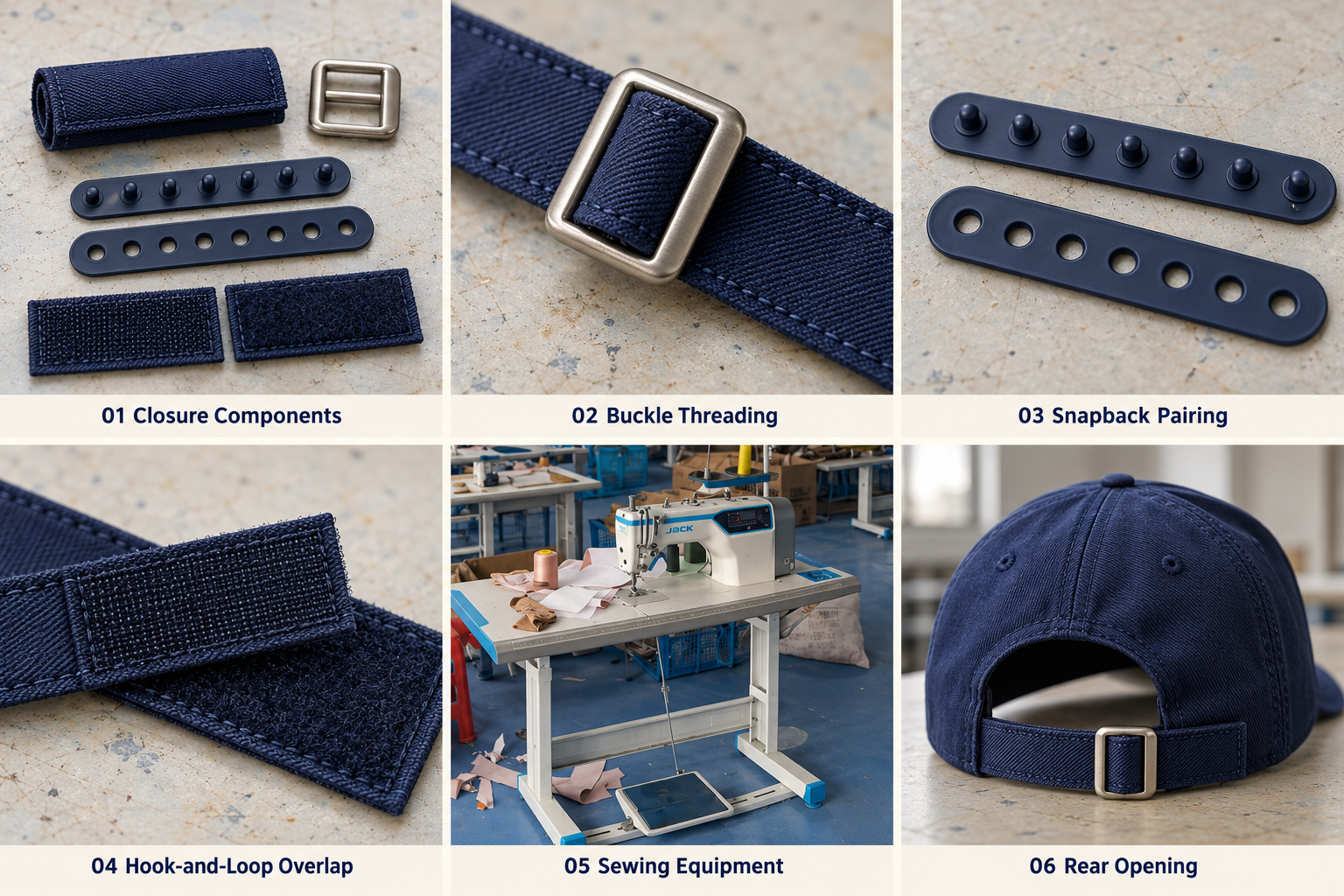 Position Both Ends Around the Rear Opening
Attachment positions should follow the agreed rear-opening outline and lower crown edge. Uneven positioning can make the closure sit at an angle or pull one side of the cap differently.
Before fixing the components, check which end belongs on each side and how it faces when worn. This matters for snapback engagement, buckle access and hook-and-loop overlap.
The closure should also remain clear of rear decoration and labels. A strap should not unintentionally cover lettering, catch a label or rub against an exposed internal seam.
Secure the Attachment Without Excess Bulk
Stitching needs to secure the closure to the intended fabric layers. Depending on the construction, reinforcement may be required at the fixing area, but its form should follow the sample rather than an assumed standard.
Checks should cover skipped stitches, loose ends, puckering and damage around the attachment. Repeated sewing through a small area can also leave visible needle marks.
Inside the cap, strap ends and reinforcement should sit neatly alongside the sweatband. Thick folds or misplaced hardware can create pressure points and interfere with adjustment.
Review Adjustment on the Complete Sample
An adjustable closure does not automatically provide a suitable fit range. Strap length, usable travel, rear-opening geometry and sweatband thickness all influence the result.
Sample review should confirm the agreed measurement method and closure setting. Check whether the buckle moves smoothly, snapback parts engage properly or hook-and-loop surfaces overlap as intended.
Our cap sizes and fit options help connect these construction choices with the required sizing. Any requested retention or durability testing needs a separately agreed method and acceptance criteria.
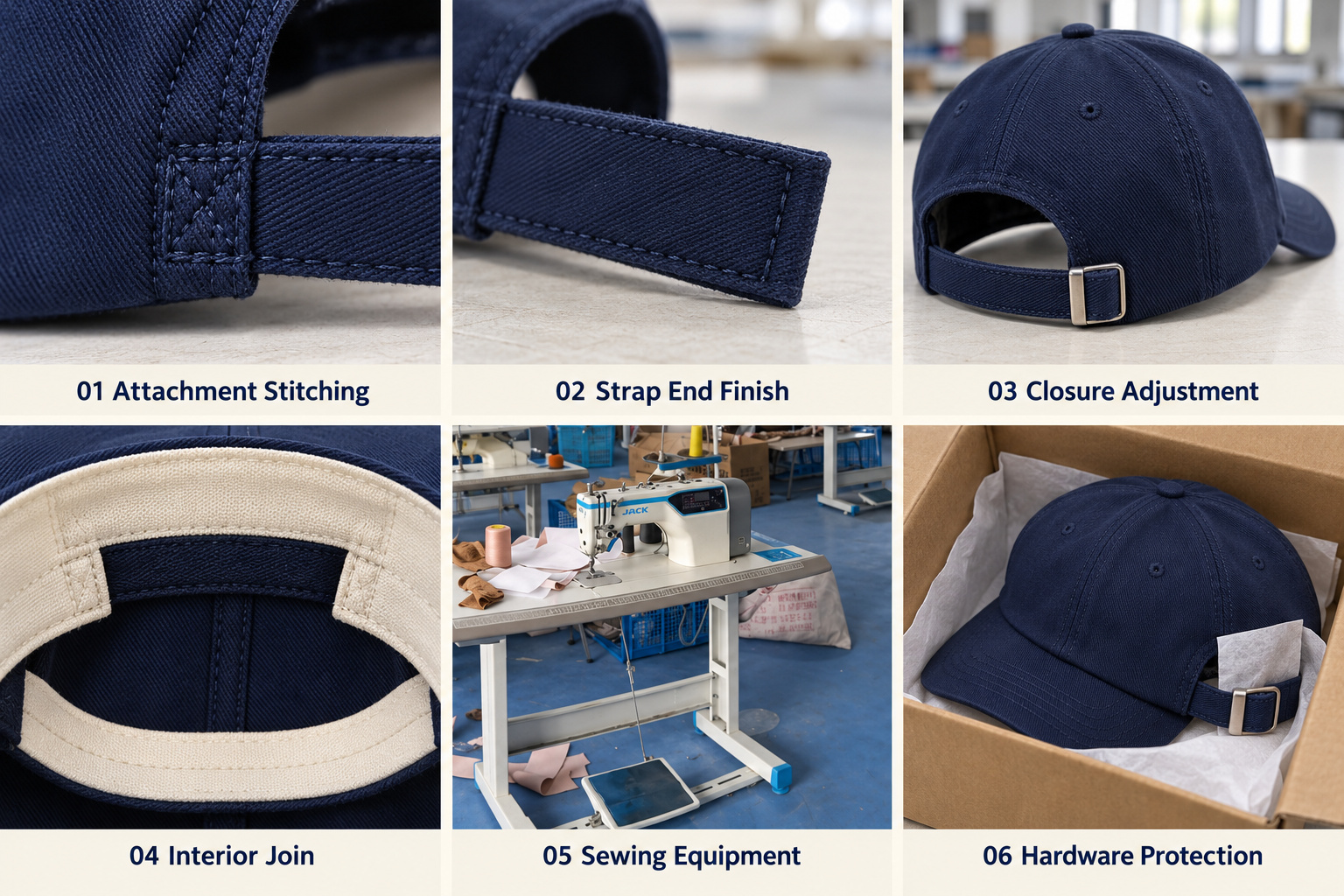 Check Workmanship and Protect the Hardware
Production checks should compare attachment position, component colour, stitching and adjustment function with the agreed sample. Both the exterior and interior need review.
The broader quality inspection process should include any order-specific closure requirements. Visual checks alone do not establish long-term durability.
During packing, metal parts should avoid pressing directly into adjacent fabric or decoration. Strap tails should be arranged without introducing sharp folds.
Provide Details for Quotation and Scheduling
Send the closure reference, strap material, colour, required fit range and quantity breakdown. Include any branded hardware request or particular threading preference.
Special components and sample revisions can affect availability, MOQ, cost and preparation time. Share packaging requirements and the delivery destination so production timing and shipment arrangements can be reviewed together.