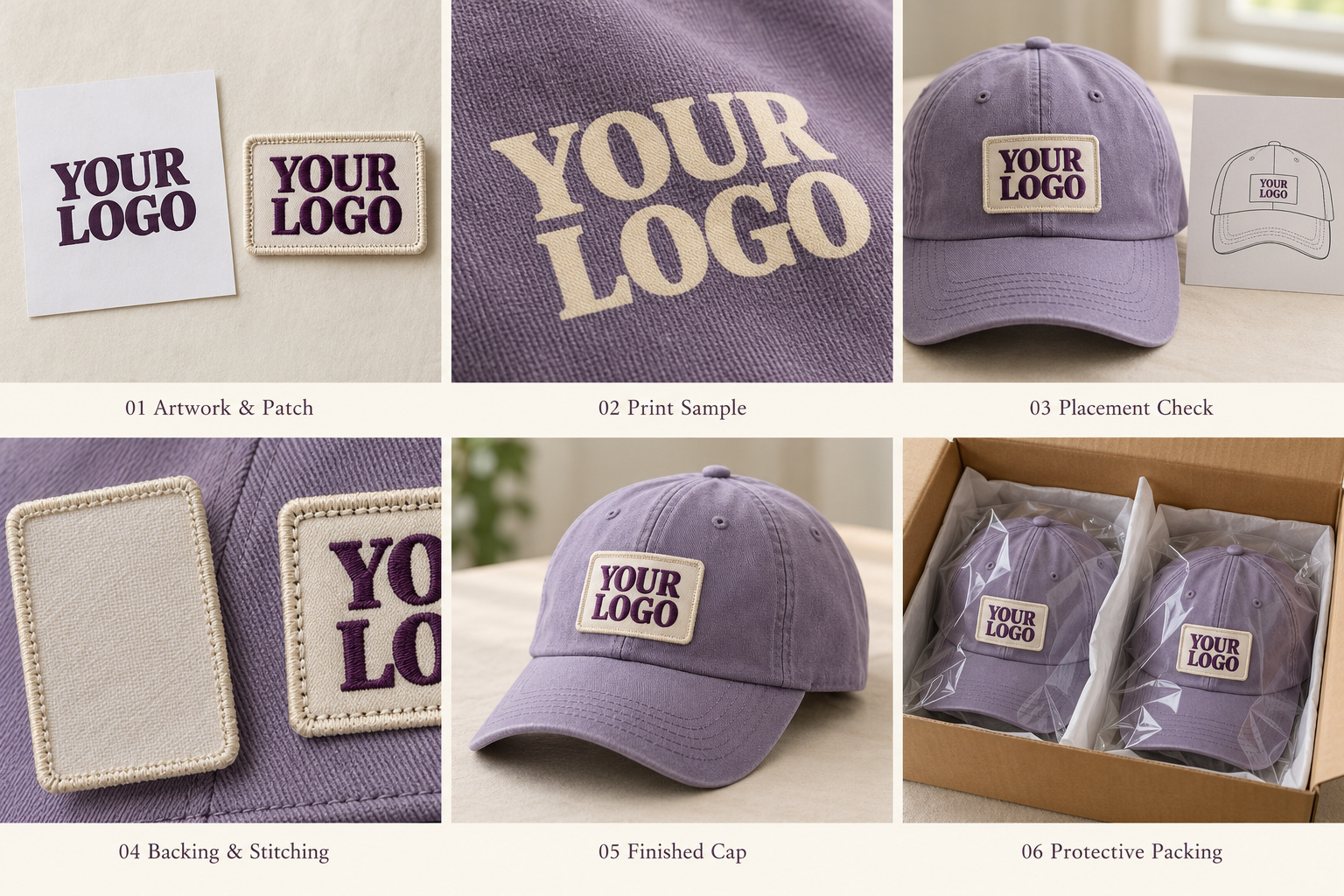


Choose Decoration Around Your Cap Design
Capzorva coordinates patch and printing development for apparel brands, importers and promotional buyers sourcing baseball caps. Send your artwork, reference cap, preferred placement and order quantity so we can review a suitable decoration route with the production partner.
The choice depends on the fabric, crown structure, artwork detail and finish you need. A patch adds an attached component, while printing applies the design to the selected surface. Neither should be selected from an artwork preview alone.
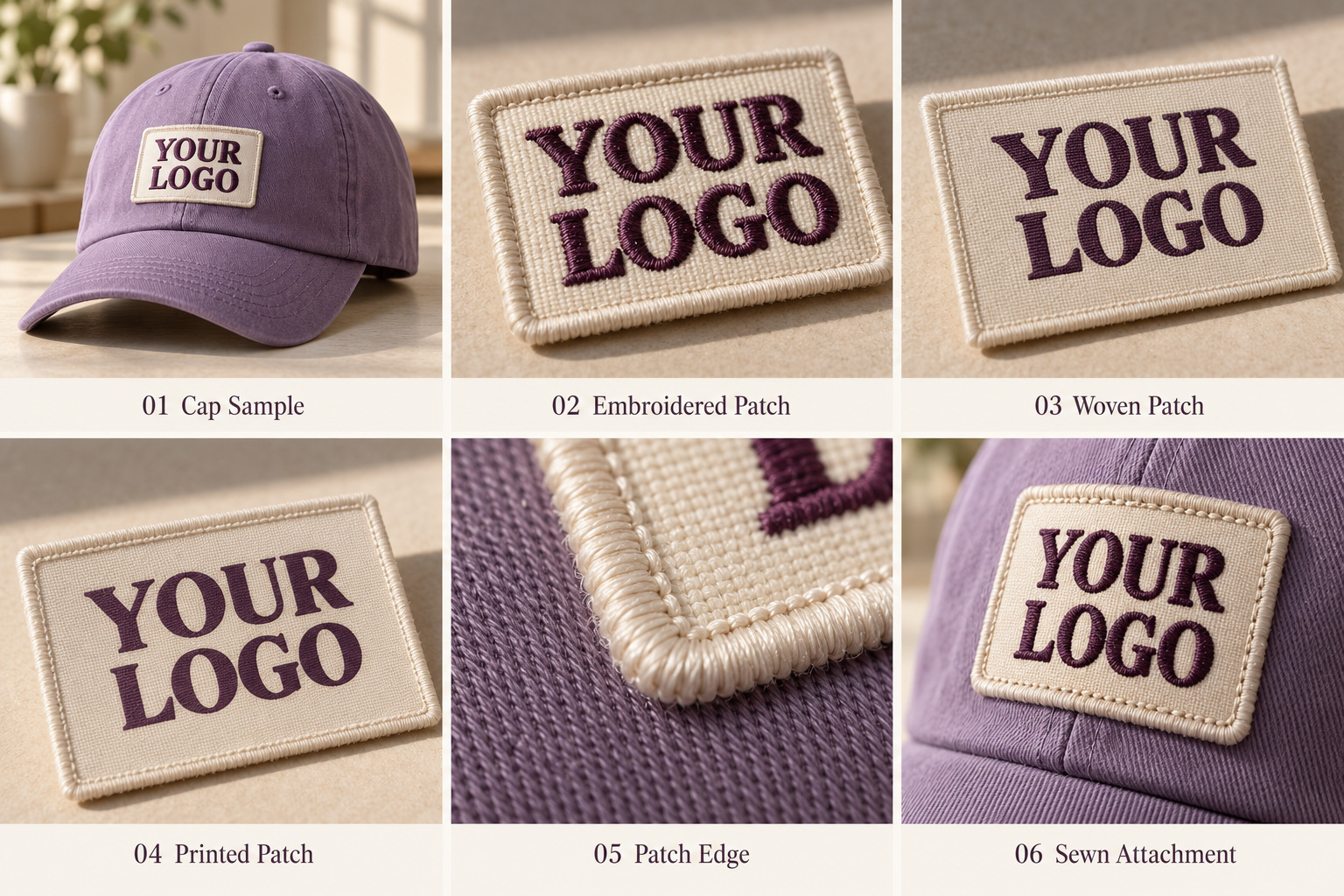
Compare Patch Materials and Attachment Methods
Embroidered patches provide visible stitch texture. Woven patches can suit finer lettering, while printed patches may accommodate artwork that is difficult to reproduce with thread. Other materials require separate confirmation for availability, thickness and attachment suitability.
Patch dimensions must suit the available panel area. A large, stiff patch can pull against a curved crown, while placement across a centre seam may affect how evenly it sits.
We review the border, attachment position and backing before sampling. Sewn attachment requires enough space around the edge. Heat-applied options need fabric compatibility checks; adhesive backing alone should not be assumed suitable for permanent attachment.
 Match Printing to Fabric and Artwork
Printing should be reviewed on the intended material. Cotton twill, polyester and mesh differ in surface texture and response to heat, which can affect coverage, edge definition and the appearance of the finished design.
Simple solid artwork and multicolour graphics may require different processes. We review available screen-printing or transfer options against the cap construction and order requirements before recommending a route.
Confirm the cap fabric and material before approving decoration. Some designs are better processed on flat panels before sewing; others require assessment on the assembled cap. Printing over seams or sharply curved areas needs particular attention.
Confirm Artwork and Approve a Physical Sample
Provide vector artwork where available, or a high-resolution file with the intended dimensions. Specify colours, placement, patch shape and any small text that must remain readable.
For patches, approval should cover the edge finish, stiffness, attachment and how the patch follows the crown. For printing, check coverage, registration, surface feel and visible distortion.
A decoration proof helps assess the artwork, but the complete cap confirms the final appearance. Our sample development process establishes the agreed reference before bulk production. Any requested durability testing must be defined separately.
Review MOQ, Cost and Production Timing
Quotation depends on patch material, dimensions, artwork complexity, print colours, decoration positions and quantities per version. Separate designs or colour combinations may involve additional setup and minimum quantities.
Confirm the sample charge, revision scope and production schedule before proceeding. Changes after approval can require new patches, revised printing setup or replacement panels. Bulk timing also depends on material availability and the confirmed decoration sequence.
Check Finished Decoration and Packing
Inspection should compare production against the approved sample for placement, attachment, colour and appearance. Patch checks include loose edges, uneven stitching and crown distortion. Printing checks include missing areas, blurred edges, unintended marks and visible surface damage.
Packing should prevent patches from bending and decorated surfaces from rubbing during transport. Raised or rigid details may need additional spacing under the agreed cap packaging arrangement.
To request a quotation, send your artwork, cap reference, decoration dimensions, quantities by design and colour, destination and required delivery date.