


Bring Panel Sections into the Agreed Crown Shape
Crown assembly brings the sewn panel sections together into the cap’s three-dimensional shell. For headwear brands, importers and distributors, this stage affects crown depth, front profile, symmetry and the position of decoration.
We coordinate assembly requirements against the confirmed sample and construction specification. Panel layout, front support, rear opening and lower-edge shape need to work together before the crown moves to later operations.
For OEM projects, a similar-looking cap is only a starting reference. Changes in material stiffness or panel proportions can produce a different profile, even when the stated head circumference remains unchanged.
Check Sewn Sections Before Joining
Panel sections should be checked for correct orientation, matching colours and consistent seam allowances. A distorted section can pull the assembled crown away from its intended shape.
Where decoration has already been applied, its direction and relationship to adjoining seams also need review. Joining the wrong section or stretching a decorated panel can shift a logo’s final position.
The reference established during cap panel sewing should remain available during assembly. Sections should stay grouped by style, size, colour and material batch to reduce mixing.
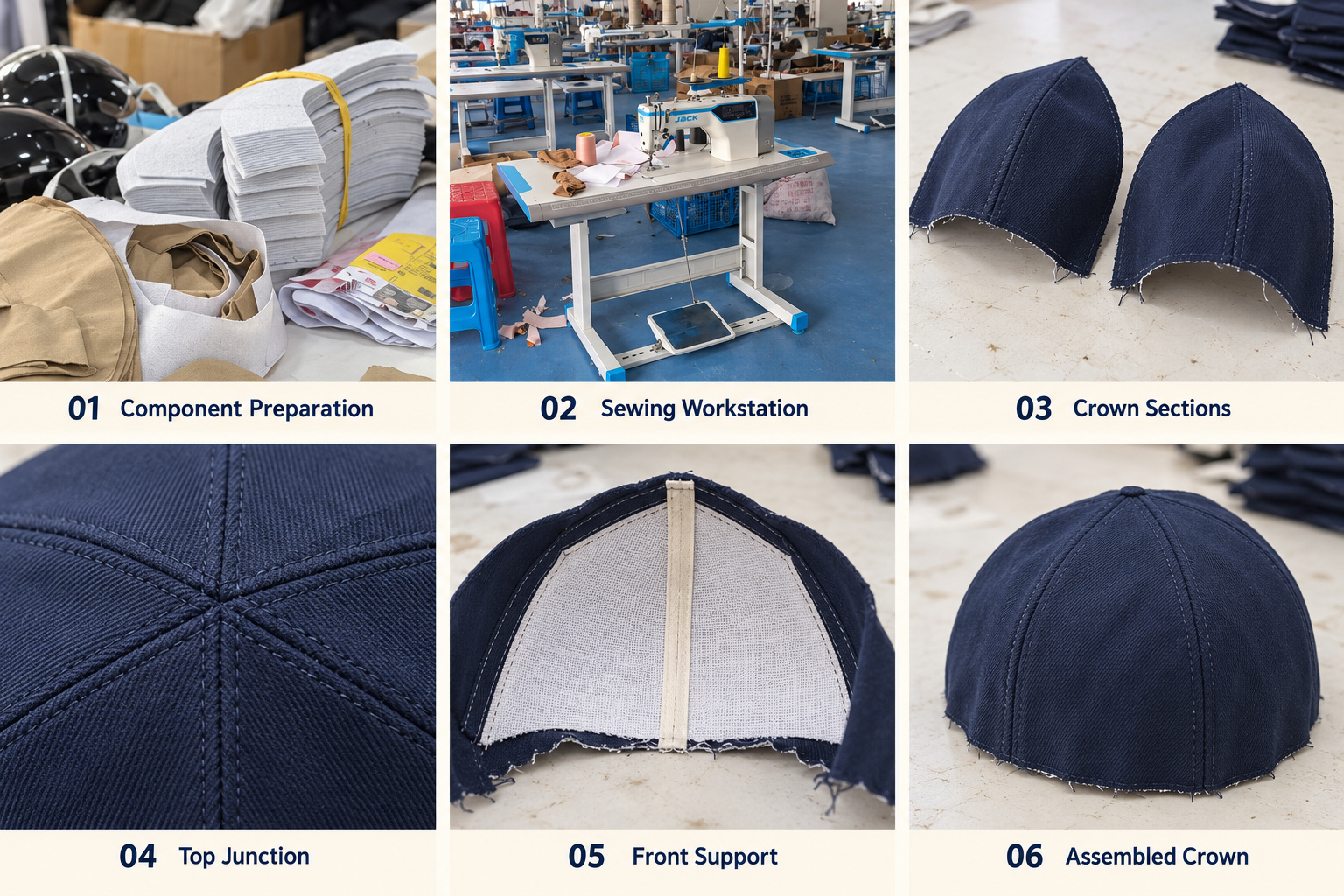 Align the Top Junction and Main Seams
The joining sequence depends on the panel construction. During assembly, corresponding edges and seam intersections need to meet without forcing one section into place.
On a six-panel crown, uneven alignment around the top junction can affect the balance of the finished shell. Bulky seam intersections may also become noticeable inside the cap or interfere with the intended top-button position.
Visible seams should follow the approved layout. A seam that twists towards one side can make the crown look uneven and change how the front decoration sits when the cap is worn.
Position Front Support Without Distorting the Shell
Structured crowns rely on the agreed support material and its placement. Support should follow the intended front-panel area without becoming folded, displaced or unintentionally caught in adjoining seams.
Unstructured crowns require a different reference. Their softer profile should be assessed without expecting them to stand like supported caps. Pulling soft panels tightly during assembly can change their natural drape.
The selected cap structure and brim configuration helps define the expected profile. Support substitutions should be reviewed through sampling because they can change both appearance and handling.
Keep the Rear Opening and Lower Edge Consistent
The rear opening needs to suit the chosen closure and the approved outline. Its shape and finish influence how the back of the cap looks and how later components can be attached.
The lower crown edge must also remain consistent for brim and sweatband attachment. Uneven joining can leave excess fabric in one area or create tension elsewhere.
At this stage, the shell is unfinished. Crown-edge dimensions provide a construction check, while final fit must be assessed after the relevant components and finishing operations are complete.
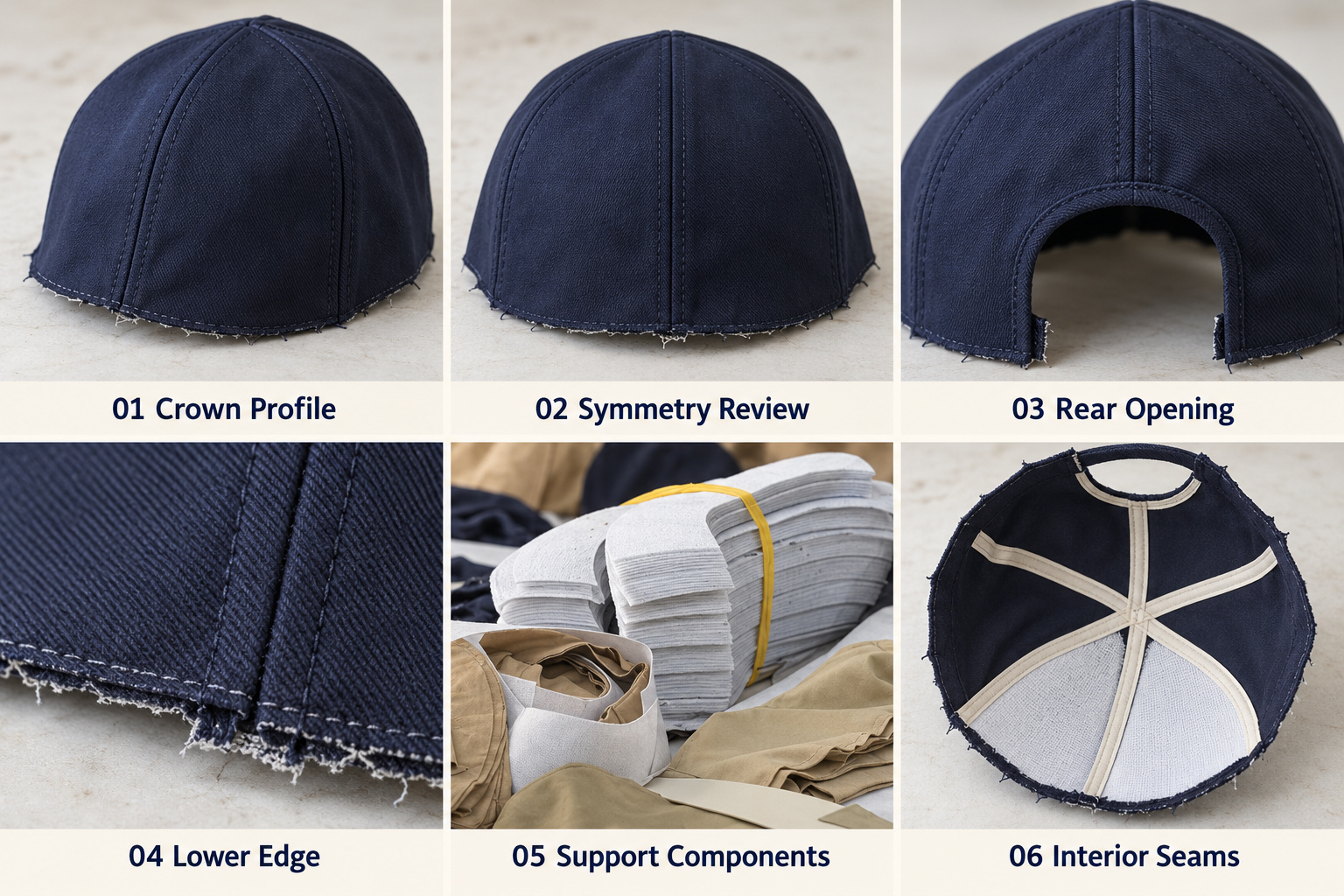 Review the Crown Before Further Attachment
Checks should cover seam balance, top-junction alignment, panel puckering, support placement and visible decoration position. Review the shell from the front, side and rear rather than relying on a single angle.
Problems should be addressed before additional components restrict access. Later shaping can refine the profile, but it should not be relied on to correct incorrectly joined sections.
The assembled sample should then progress through cap sample development so fit and appearance can be reviewed as a complete cap.
Confirm Details That Affect Cost and Scheduling
Send the reference cap, panel layout, crown depth requirements, support preference and closure type with the quantity breakdown. Note any contrasting panels or decoration near joining seams.
Additional construction details and sample revisions can affect preparation time and labour. Order timing should be confirmed after the assembly reference is settled. Handling and packing arrangements should protect the agreed crown profile through finishing and shipment preparation.