


Establish the Finished Shape Reference
Shaping and finishing prepare an assembled baseball cap for final review and packing. For headwear brands, importers and distributors, this stage affects crown presentation, brim curvature and the consistency of caps across an order.
We coordinate finishing requirements against the approved sample and construction specification. Crown height, front profile, brim curve and the intended softness should be understood before processing begins.
For OEM projects, provide front, side and rear views of the reference cap. A physical sample is useful when photographs cannot communicate fabric drape or firmness. Shaping should refine correctly assembled construction; it cannot reliably correct inaccurate panels or misplaced seams.
Match the Method to the Materials
The finishing method needs to suit the outer fabric, crown support, brim insert and decoration. Where heat or steam is appropriate, its application should first be reviewed on a sample of the agreed construction.
Different materials can respond differently. Excessive treatment may affect surface appearance, dimensional stability or the feel of supporting components. Printed surfaces, patches and raised embroidery also need protection during handling.
Any material substitution should therefore be reviewed before repeating the same finishing approach. The selected cap fabrics and materials help establish what needs checking.
 Refine the Crown Without Forcing Its Structure
Structured caps should follow the agreed front profile while keeping panel seams balanced. Soft crowns should retain their intended drape rather than being forced into a rigid appearance.
Review the crown from several angles. Local folds, seam puckering and uneven support may become more noticeable once the shell is presented in its finished form.
If the problem comes from assembly, it should be referred back for correction. Applying more pressure or treatment can hide a defect temporarily without resolving its cause. The reference established during crown assembly remains relevant throughout finishing.
Keep the Brim Curve and Decoration Consistent
Brim curvature should match the accepted sample. A gentle curve, pronounced curve and flatter profile require distinct references, particularly when several styles are being processed together.
The brim should sit evenly beneath the crown without twisting to one side. Its fabric covers should remain smooth, with no sharp crease introduced during handling.
Decoration needs separate attention. Raised embroidery should avoid flattening, while patch edges and printed areas should be checked for changes in appearance. Finishing should not alter the approved logo position or obscure lettering.
Trim Threads and Review Surface Appearance
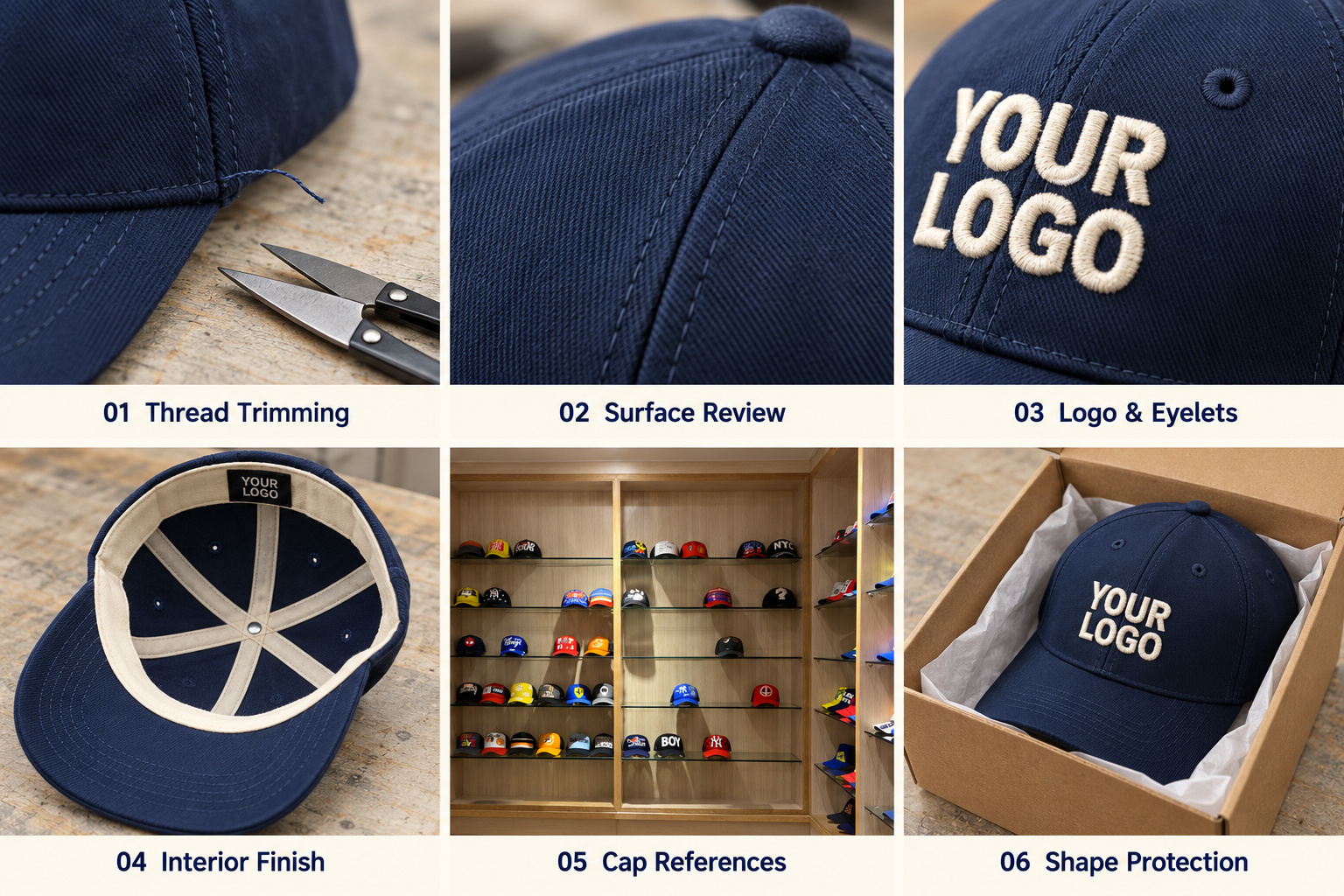
Thread trimming should remove loose ends without cutting structural stitches or damaging adjacent fabric. Particular care is needed around embroidery, eyelets, strap attachments and internal seam intersections.
Surface review should cover lint, visible marks, handling creases and uneven areas. Any cleaning method needs to suit the fabric and decoration; an unconfirmed treatment may leave a different mark or change the surface.
Check the interior as well. Loose threads, folded labels or twisted sweatbands can remain unnoticed when review focuses only on the cap’s exterior.
 Review Caps After They Have Settled
Where heat or steam has been used, allow caps to cool and dry appropriately before judging the final result or enclosing them in packaging.
Compare crown profile, brim shape and relevant measurements using the agreed method. Caps should not be stretched into position for a photograph or measurement.
Finishing review supports the subsequent quality inspection. It does not replace checks on size, component attachment, decoration and order identification.
Protect the Finish Through Packing
Packing arrangements should preserve the accepted crown and brim profile. Nesting, protective inserts and carton quantities need to suit the construction without introducing excessive compression.
Send the reference cap, expected finish, quantity breakdown and packaging preferences for review. Special handling and sample revisions can affect labour and timing. Confirm these details before agreeing the production schedule and shipment preparation.