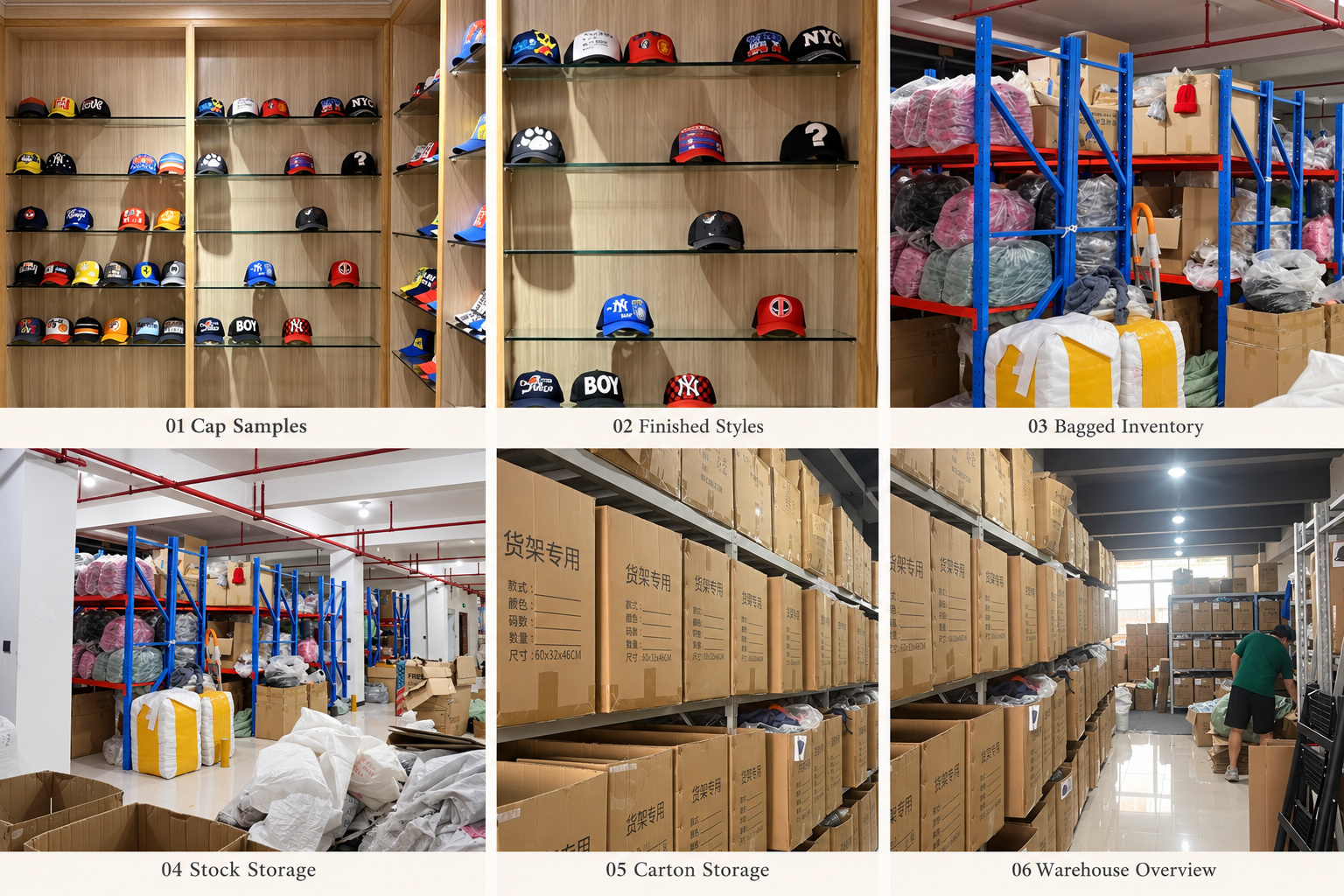


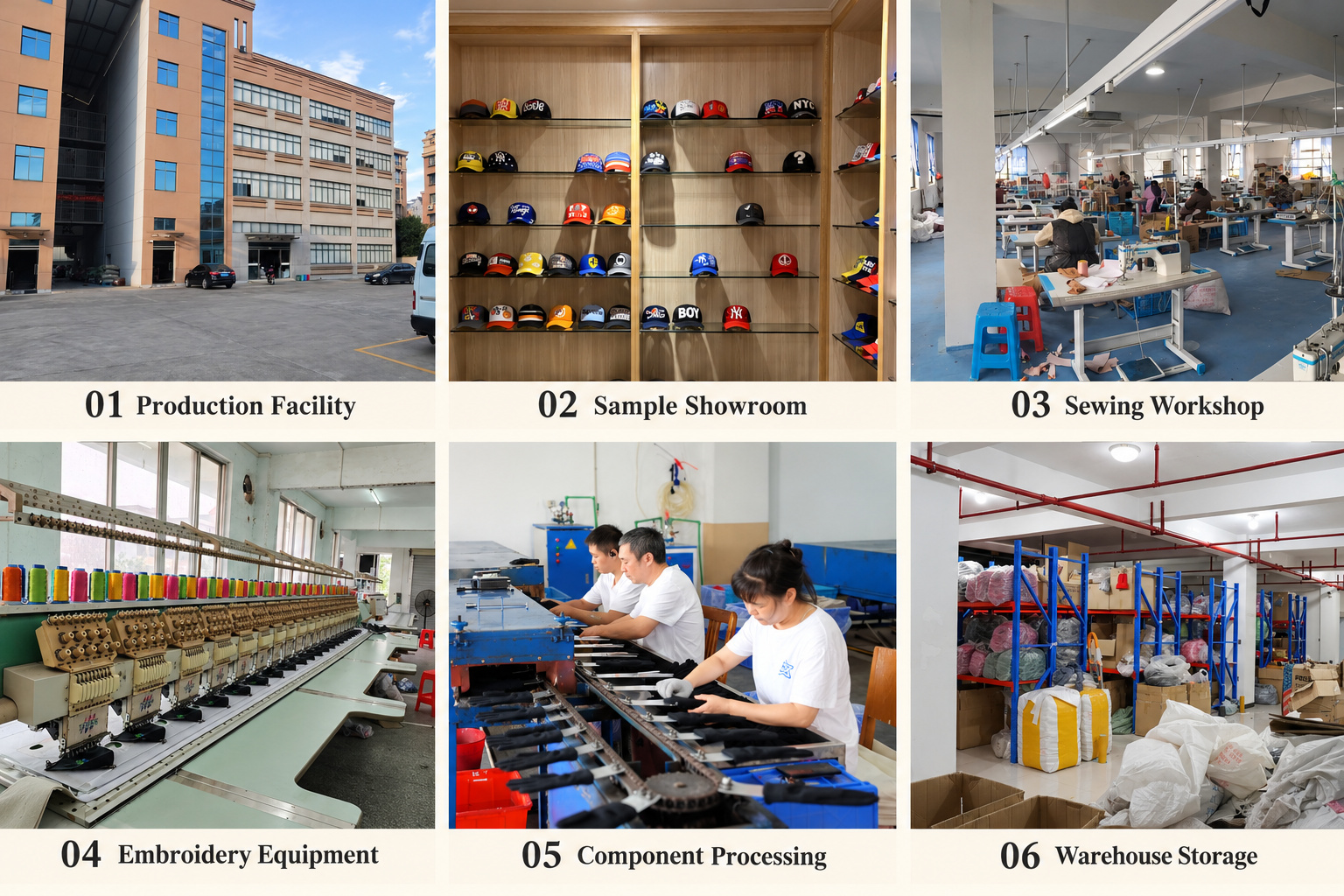
 Connect the Approved Sample with Production
Capzorva coordinates baseball cap manufacturing through suitable production partners for apparel brands, importers and distributors. We review the cap construction, materials, decoration and packing requirements together so the production specification reflects the approved sample.
The production route depends on the design. A soft cotton cap, a structured embroidered cap and a mesh-back cap require different materials and assembly details. Before production, confirm the quantity breakdown, artwork, measurements, components and any inspection requirements.
The stages below explain where these decisions affect the finished cap and what buyers should confirm before an order proceeds.
Prepare Fabrics, Support Materials and Trims
Preparation covers the outer fabric, front-panel support where required, brim inserts, sweatbands, seam tapes, closures and labels. These components need to work together without changing the intended fit or appearance.
Fabric colour and texture should be checked against the agreed reference. Materials used across the crown, brim and adjustment strap may show natural differences, particularly when their composition or construction differs.
Through fabric and material preparation, confirm component specifications and availability. Proposed substitutions need review before use. Material readiness also affects when cutting and subsequent operations can begin.
Cut Panels and Prepare Logo Processing
Cutting establishes the crown panels, brim covers and other fabric components. Panel shape, grain direction, seam allowance and consistent sizing affect crown symmetry and assembly.
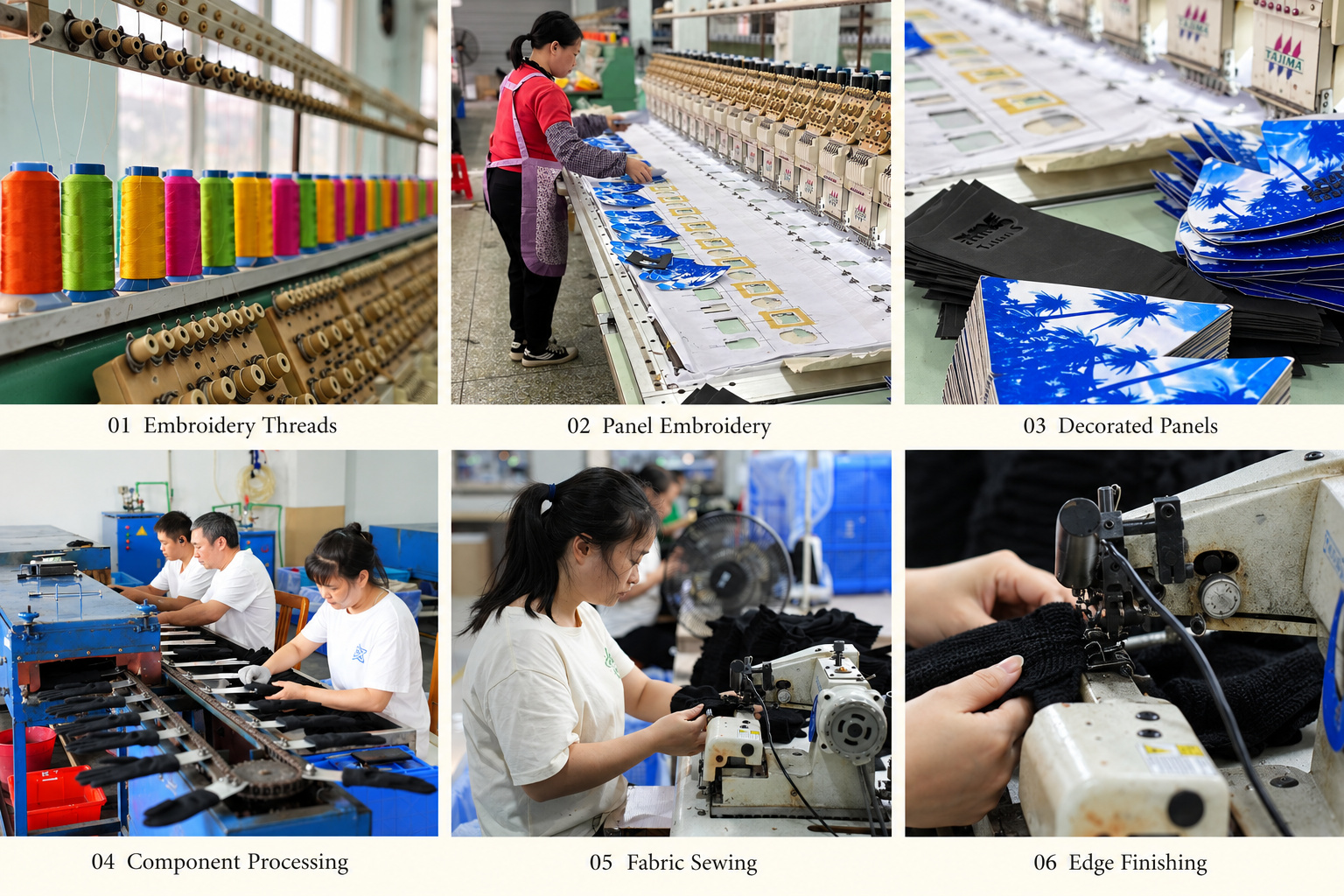
Decoration placement must be considered at this stage. Embroidery or printing may be applied to flat panels before sewing, depending on the artwork and construction. Seam positions and front-panel support can influence the final logo appearance.
Separate logo proofs help assess detail and colour, while the complete sample confirms how the decoration sits on the crown. Changes to logo dimensions or position after processing may require replacement panels.
 Sew Panels and Assemble the Crown
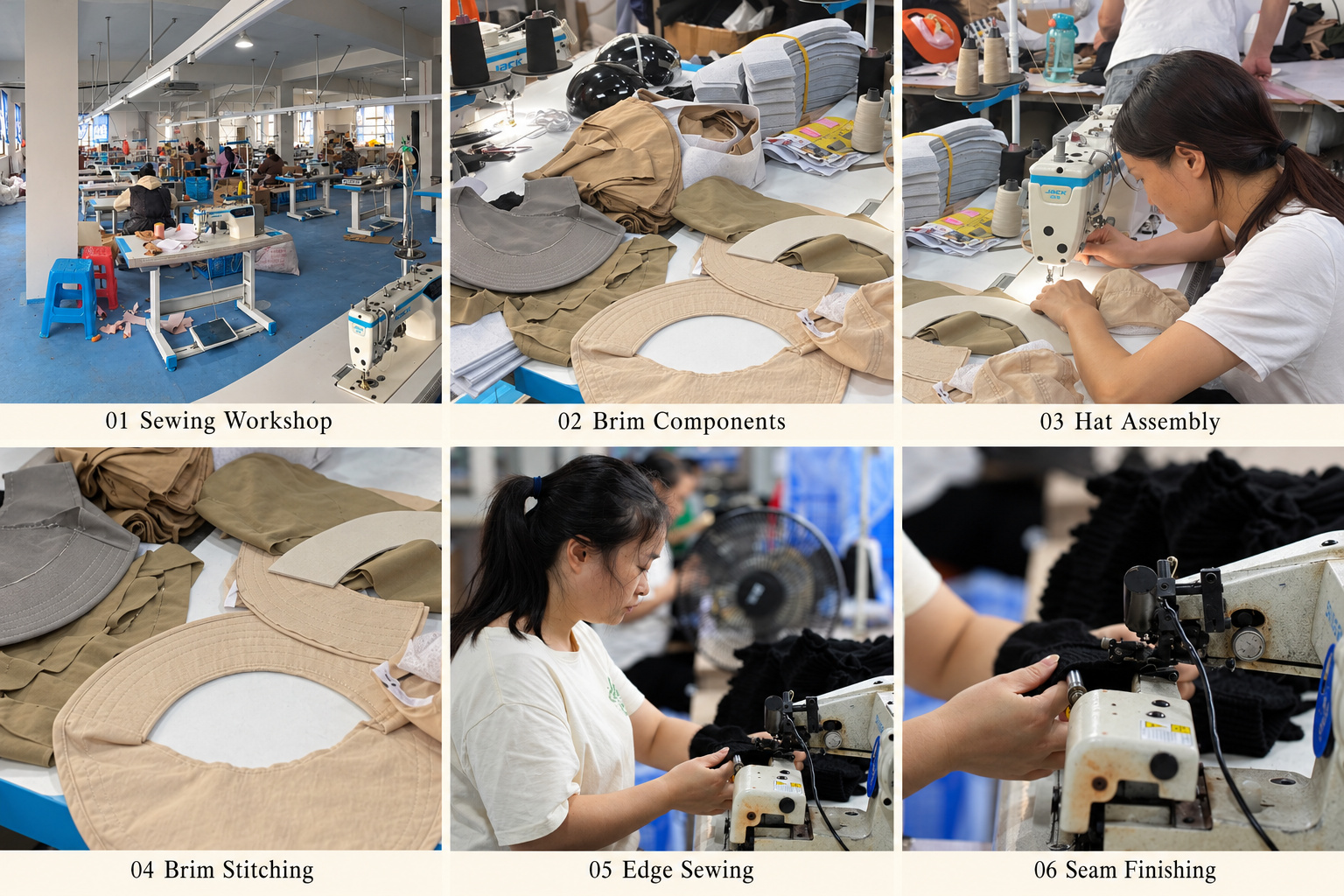
Panel sewing joins the cut pieces into the specified crown shape. Consistent seam allowances, stitch formation and panel alignment help control symmetry, depth and the position of the front seam.
Internal seam binding covers joined edges and contributes to a clean finish. Eyelets and the top button are incorporated according to the selected construction and production sequence.
The cap panel sewing stage should preserve the approved profile without unnecessary puckering or uneven joins. Fit cannot be judged from the outside alone; internal construction and the sweatband position also need checking.
Prepare the Brim and Attach Internal Components
The brim insert and fabric covers establish the intended profile. Insert shape, cover alignment and stitching influence appearance and how evenly the brim connects to the crown.
Flat and curved brims need different handling. Confirm the approved shape before finishing rather than relying on packing to correct it.
Sweatbands, labels and rear closures are attached in the appropriate sequence. Closure positioning affects adjustment, while bulky internal joins or exposed label edges can affect comfort. Check that the completed arrangement matches the sample, including strap direction, attachment stitching and label orientation.
 Shape, Finish and Inspect the Caps
Finishing includes thread trimming, surface cleaning and shaping appropriate to the fabric and crown construction. Heat or moisture exposure must suit the selected materials and decoration.
Inspection compares production with the approved sample and written specifications. Review crown symmetry, agreed measurements, brim profile, seams, logo appearance, closure operation and correct labels.
Define measurement methods, tolerances and inspection scope before production. Any laboratory testing or third-party inspection requires separate agreement. Findings that need correction should be addressed before packing is released.
Pack for the Agreed Delivery Arrangement
Packing should preserve the approved crown and brim while protecting decoration and hardware from rubbing. Individual bags, supports, boxes and carton quantities depend on the cap and destination requirements.
Confirm assortment, carton identification and warehouse instructions before packing materials are finalized. Final carton dimensions and weights support transport planning once the arrangement is established.
Our packaging and export preparation follows the confirmed order requirements. To review a project, send your cap reference, artwork, specifications, quantities by style and colour, destination and required delivery date.