

Plan Packaging Around the Cap and Delivery Route
Capzorva coordinates baseball cap packaging for apparel brands, importers and distributors. We review individual protection, branded boxes and outer cartons against the confirmed cap construction, order quantities and delivery requirements.
A soft unstructured cap, a structured crown and a cap with raised embroidery need different packing arrangements. Send your cap reference, quantities by style and colour, destination and warehouse requirements so the packaging proposal reflects how the goods will be handled.
Choose Individual Bags or Branded Boxes
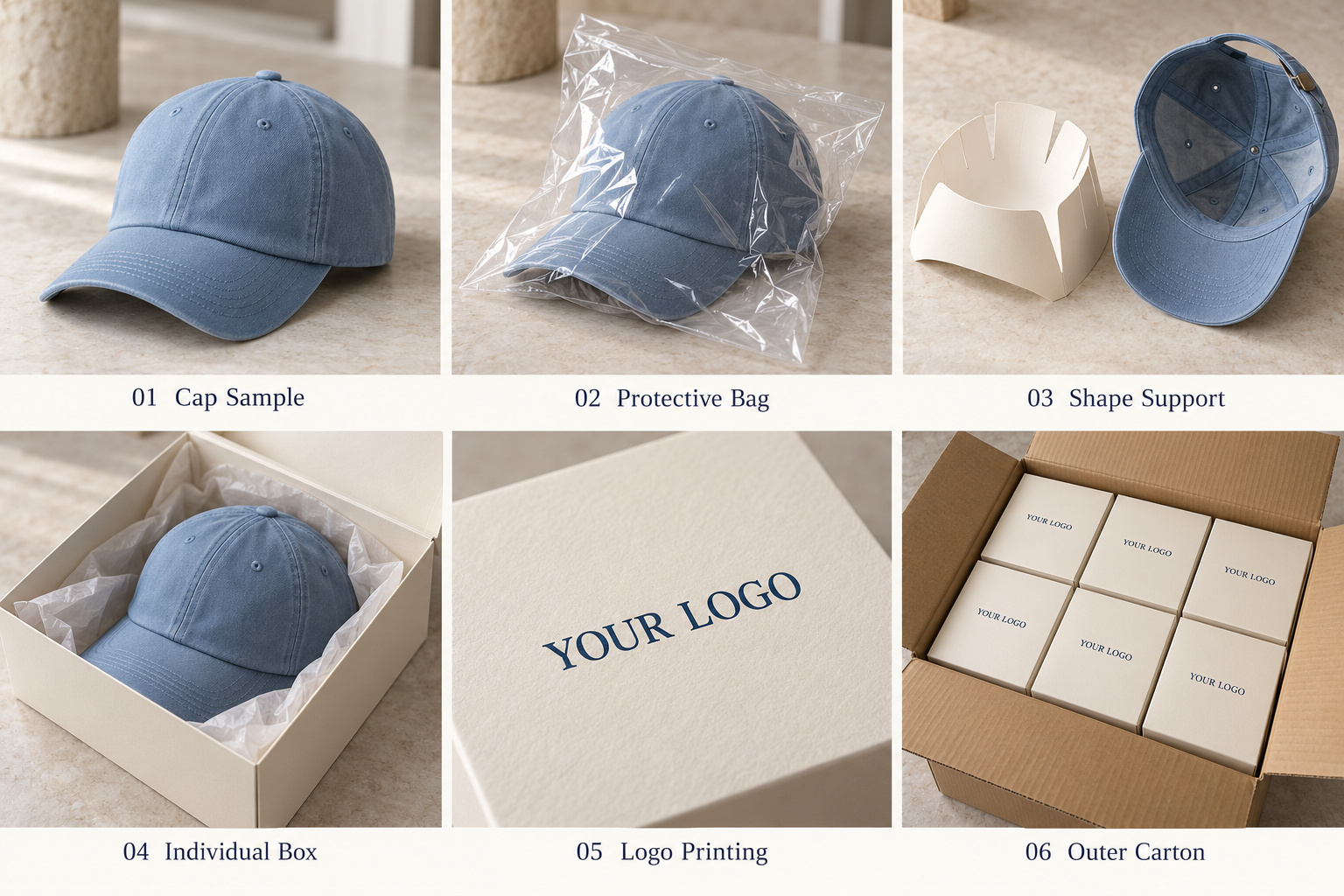
Individual bags can separate caps and help protect surfaces from dust and rubbing. Confirm bag dimensions, material, closure and any required printed wording. The bag should accommodate the cap without pulling the crown down or forcing the brim into an unintended curve.
Paper sleeves, individual boxes and printed colour boxes can be reviewed where suitable. Box dimensions should follow the approved cap and packing method. An oversized box adds shipping volume; a tight box may compress the crown or decoration.
For printed packaging, provide artwork for each surface, including logo placement and any product identification. Material, print colours, finish and quantities per design affect the quotation.
 Protect the Crown, Brim and Decoration
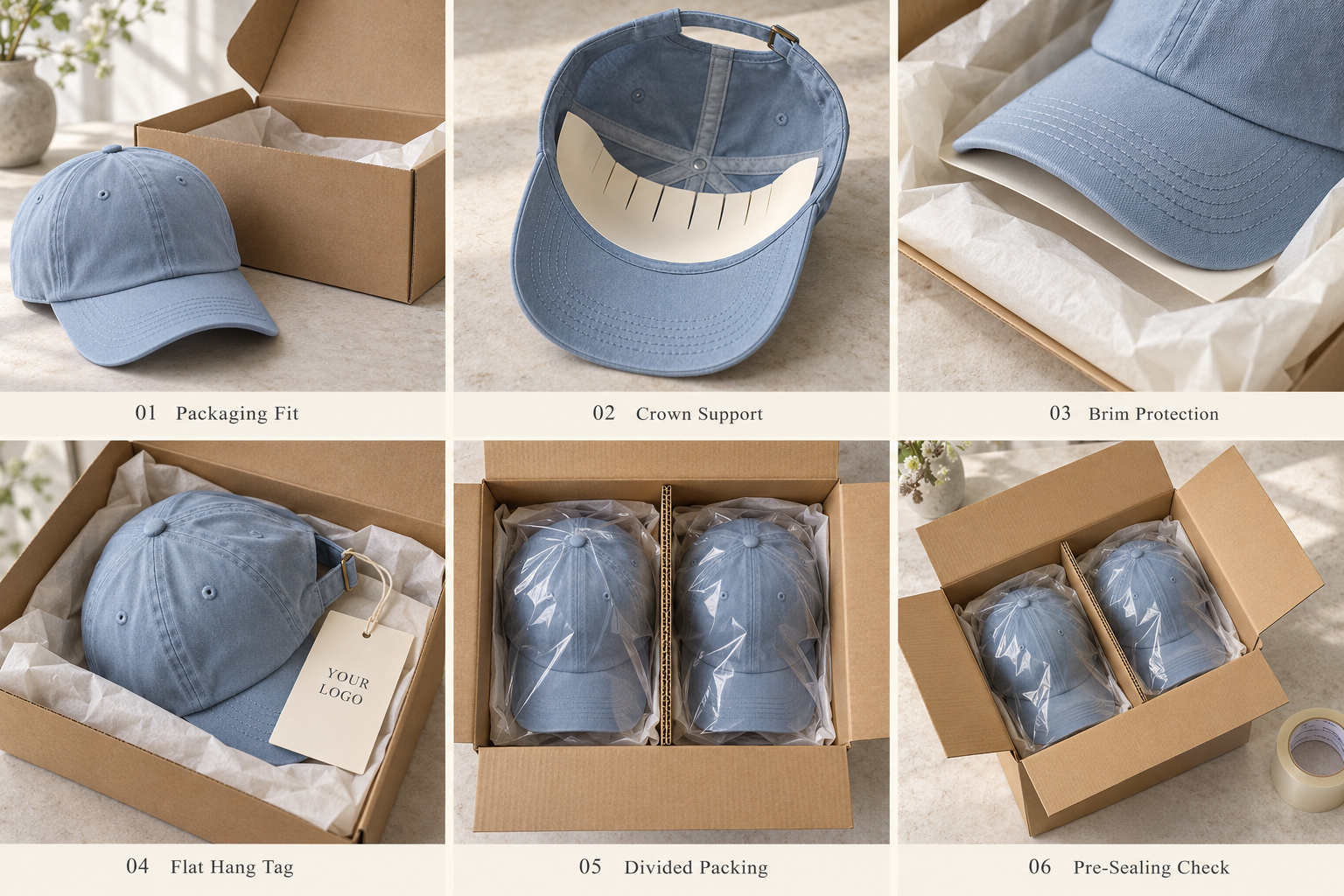
Packing starts with the shape that must be preserved. Structured caps may need internal support or controlled spacing. Unstructured caps can allow a different arrangement, but folding should still be agreed against the finished sample.
Flat brims should remain flat, while curved brims should retain their approved profile. Review these requirements alongside the cap structure and brim specifications.
Raised embroidery, rigid patches and metal closures also need attention. Tissue separators, bag placement or spacing may help prevent decoration from rubbing and hardware from marking adjacent fabric. Any support material must fit without creating pressure points.
Confirm Carton Quantities and Identification
The number of caps per carton depends on crown height, brim shape, individual packaging and the agreed arrangement. Nesting may reduce volume, but it should be checked for pressure on crowns, logos and tags.
Confirm whether cartons contain one style and colour or an agreed assortment. Carton markings can identify item references, quantities and destination details using buyer-approved information.
Warehouse labels, barcode placement and pallet requirements should be supplied before packing materials are ordered. Estimated carton dimensions and weights can then support freight planning; final figures depend on the completed packing arrangement.
Approve Packaging Samples, MOQ and Timing
A packaging sample should demonstrate fit as well as appearance. Review the complete cap inside the proposed bag or box, the position of hang tags and the way units sit in the outer carton.
Through the sample development process, confirm materials, artwork, dimensions and packing sequence before approval. Photographs can show the arrangement, while physical samples help assess handling and fit.
Packaging MOQ and setup charges depend on material, printing and construction. Separate artwork versions may require separate quantities. Sample timing and production availability are confirmed after review, and late changes can affect the packing schedule.
Check Packing Before Shipment
Packing checks should cover cap condition, correct bags or boxes, quantities, assortment and carton markings. Tags should remain flat, closures should not press into fabric, and approved supports should be positioned consistently.
Any transit testing or third-party inspection must be agreed separately. Shipment preparation follows the confirmed packing and export requirements, including the selected delivery terms.
For a quotation, send your cap reference, packaging artwork, quantities per design, preferred packing format, destination and required delivery date. Include any carton size or warehouse restrictions.