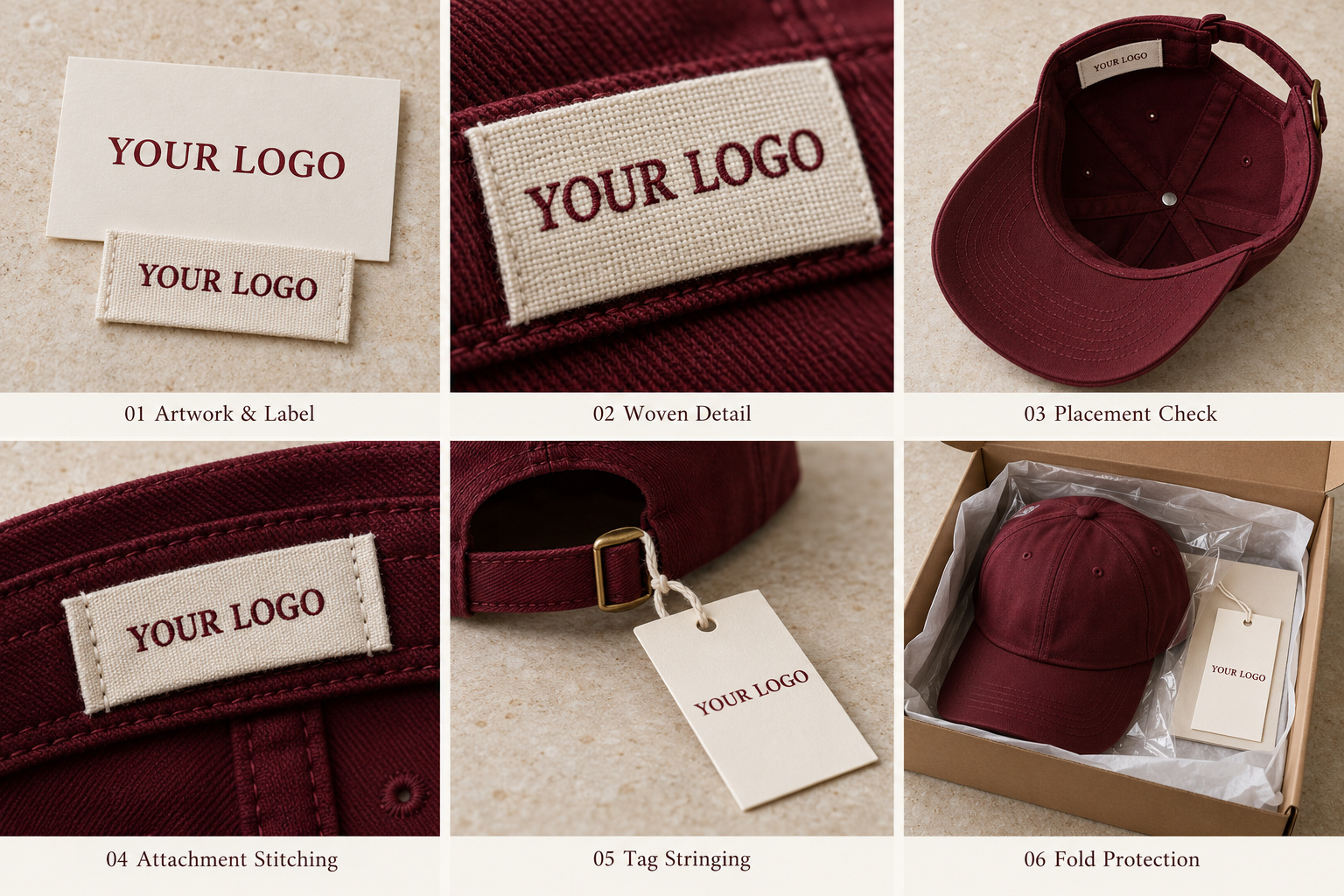


Develop Labels Around Your Cap Order
Capzorva coordinates cap labels and hang tags for apparel brands, importers and distributors developing branded baseball caps. We review these components alongside the cap specifications so their dimensions, attachment and wording are confirmed before production.
Send your logo artwork, required label text, reference images and quantities by style. Identify which components you need: an inside brand label, size label, care label, hang tag or a combination. Each serves a different purpose and needs its own approval.
Choose Label Materials, Folds and Placement
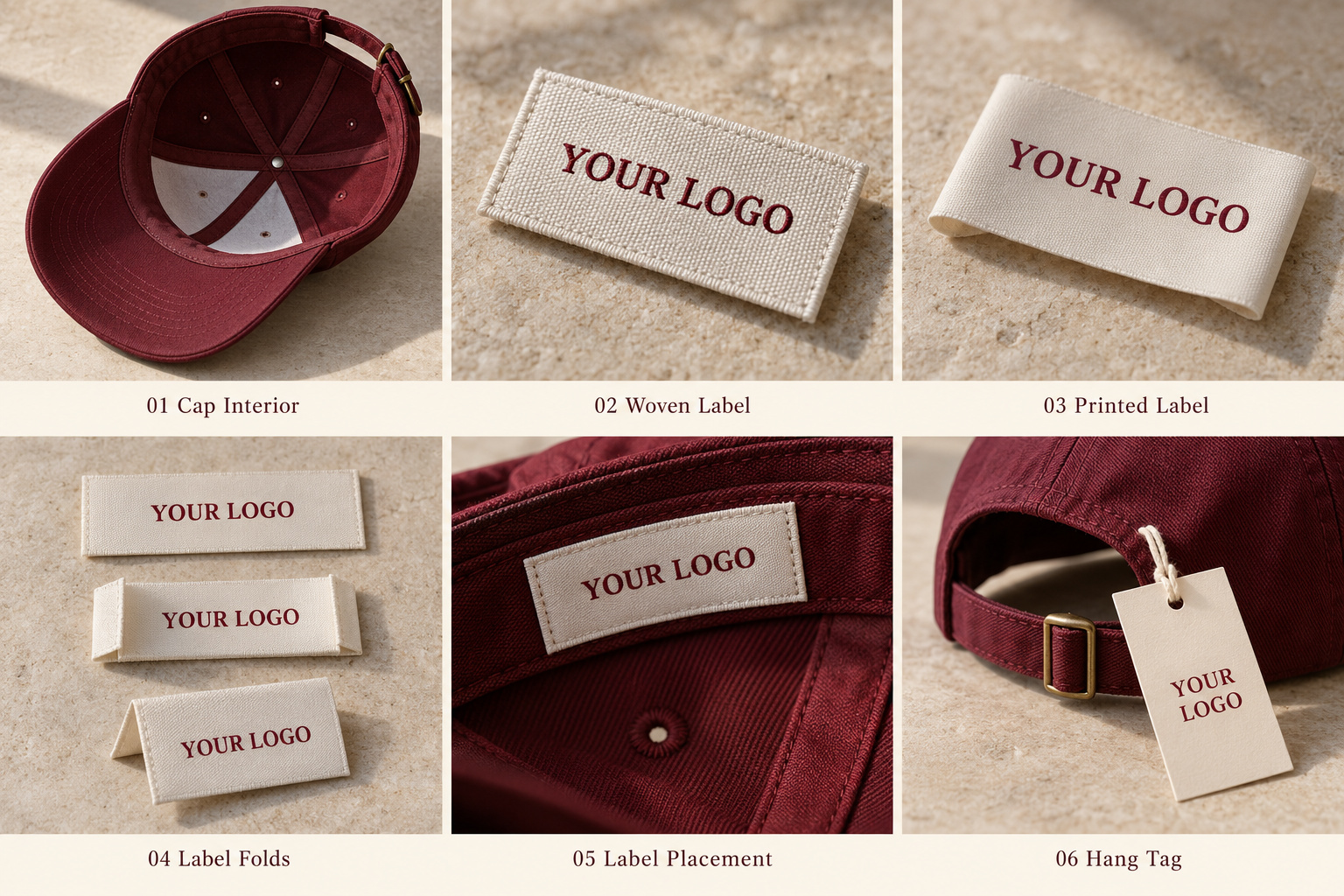
Woven labels suit brand names and simple graphics with a textile finish. Printed labels may accommodate longer wording, subject to material and print suitability. Small lettering must be checked at its actual finished size rather than enlarged on screen.
Specify the finished dimensions, fold direction and sewing allowance. An end-fold label, centre-fold label and flat label require different artwork layouts. Text placed too close to an edge can disappear into the seam.
Placement also affects comfort and assembly. A label near the sweatband should avoid exposed rough edges or bulky stitching. Confirm its orientation on the complete cap, including how it appears when the sweatband is lifted.
 Confirm Hang Tag Stock and Attachment
Hang tag specifications should cover the card dimensions, paper stock, thickness, print sides, surface finish and hole position. A small tag may suit a compact logo, while additional product information requires enough space for readable text.
Provide separate front and back artwork. Keep essential wording clear of the trim edge and attachment hole. Printed colours should be reviewed on the selected stock because uncoated and coated surfaces can produce different results.
Confirm the string, loop and attachment point before sampling. The fastening should avoid unnecessary holes, marks or distortion in the cap. Coordinate the tag position with the agreed packaging arrangement so it does not crease or rub against the decoration.
Supply Final Wording Before Sampling
Brand names, size descriptions, fibre composition, care instructions and origin statements must match the actual product and intended destination. Provide approved wording and language requirements for review. Certification marks require separate verification and authorization before inclusion.
If barcodes are needed, supply the correct code for each item and confirm the required format and placement. A visual artwork check does not establish scanning performance; any scanning requirement should be agreed before production.
For a wider branding programme, coordinate these details with your private label baseball cap specifications.
Approve Samples, MOQ and Production Timing
Label and tag costs depend on material, dimensions, colours, finishing, attachment and quantities per version. Different sizes, languages or designs may create separate minimum quantities and setup charges. Confirm how any unused components will be handled.
Review physical components and their attachment on a complete cap through the sample development process. Approval should cover legibility, wording, colour, folds, orientation and sewing position.
Sampling and production schedules are confirmed after specification review. Changes to wording or artwork after approval may require replacement components and affect the cap packing date.
Check Identification Before Packing
Production checks should compare labels and tags against the approved versions. Check spelling, size information, attachment security, print clarity and the correct combination for each cap style.
Packing instructions should identify how styles, sizes and tag versions are separated. Tags should lie without sharp bends, and fastenings should not press into the fabric during transport.
For a quotation, send the component list, finished dimensions, artwork, wording, quantities by version, cap reference and destination. Include your required delivery date and any special packing instructions.