


Establish the Shape Before Finalizing Details
Capzorva Baseball Cap coordinates crown and brim development for apparel brands, importers and wholesale buyers through cooperating production partners. We review reference caps, drawings and construction requirements to identify a practical sampling route.
Specify which features define your intended shape: front-panel firmness, crown height, panel layout, brim length or curvature. Photographs communicate the overall appearance, but a physical reference helps clarify proportions and stiffness. Identify the features you want to retain and those that need adjustment before quotation.
Choose Crown Support and Panel Construction
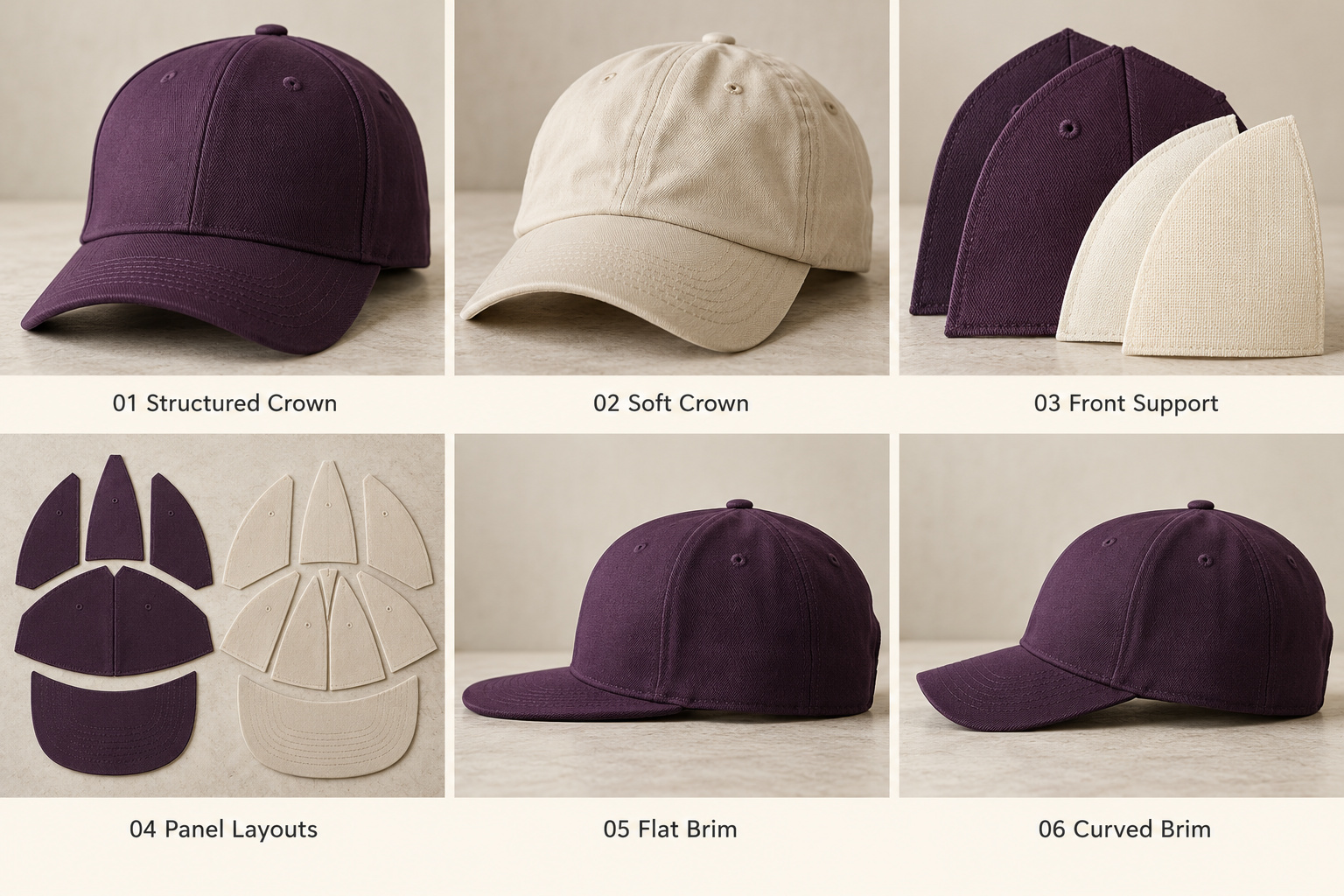
A structured front uses supporting material to help maintain its profile. An unstructured crown relies more on fabric and panel construction, producing a softer shape. Support should be selected alongside the outer material; heavier fabric alone does not establish the required crown firmness.
Panel count, seam placement and crown proportions influence both appearance and decoration space. Changes to the front panels can alter how an embroidered design sits across the crown. We review these details with the production partner rather than treating each adjustment as an independent option. Related measurements are covered in our cap sizes and fit page.
 Define Brim Dimensions, Curvature and Firmness
Confirm brim projection, width, outline and the intended flat or curved profile. State whether measurements follow the surface curve or use a straight distance, since the two methods can produce different readings.
The internal insert, covering fabric and stitching arrangement contribute to brim firmness and appearance. A longer or wider brim may require a revised pattern and another sample. Provide a reference where flexibility matters, and explain whether the cap should retain a defined curve or allow adjustment. Available insert options are confirmed against the selected construction.
Review the Crown and Brim as One Assembly
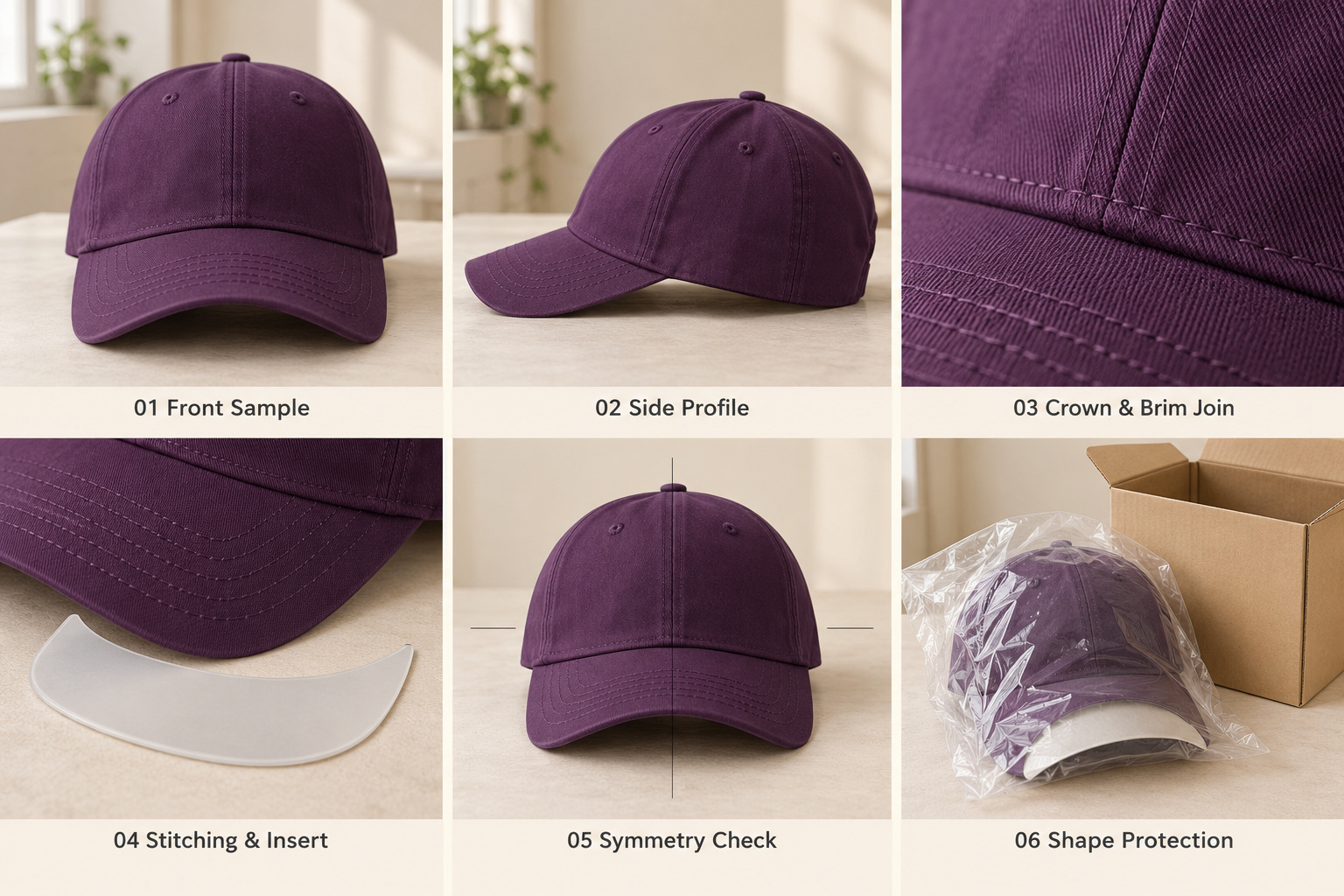
The crown-to-brim connection determines centering, front balance and how the cap sits when worn. A brim that looks correct separately may appear too wide or sharply curved once attached to the approved crown.
Sample review should check the front, side and rear views, including brim alignment and the transition into the crown. Decoration also needs consideration: front embroidery, brim stitching and patches can affect the visual balance. Our logo and embroidery options explain the information needed to assess placement.
 Approve Construction Samples and Order Conditions
A change in support, fabric or brim insert can affect the complete cap, so approval should identify the final combination. Record the agreed shape, measurements, materials and revision version through the cap sample development process.
New patterns, special components and additional sample rounds may influence cost, MOQ and preparation time. Provide quantities per style and color when requesting a quotation. Production timing is confirmed after construction approval, material availability and order terms have been reviewed.
Check Shape Consistency and Packing Protection
Agreed production checks should cover crown profile, panel alignment, brim centering, stitching and visible symmetry against the approved reference. Inspection methods and tolerances need confirmation before production; third-party inspection is arranged separately.
Packing should protect supported front panels and preserve the approved brim profile. Nesting direction, protective inserts and carton quantities must suit the construction rather than follow one packing method for every cap.
Send your reference cap or drawings, requested structural changes, brim requirements, quantities and destination. We will review feasibility with the relevant production partner and confirm a sample and quotation plan.