


Select Materials Around the Finished Cap
Capzorva Baseball Cap coordinates material selection for apparel brands, importers and wholesale buyers through cooperating production partners. We review fabric requirements alongside cap construction, decoration and order quantities before confirming available options.
Start with the intended result: a firm structured crown, a relaxed cotton cap or a lighter construction with mesh panels. Send a reference cap or swatch where possible. Fabric appearance alone does not establish suitability; weight, stiffness, thickness and surface texture influence how the finished cap looks and fits.
Compare Cotton, Polyester and Mesh Options
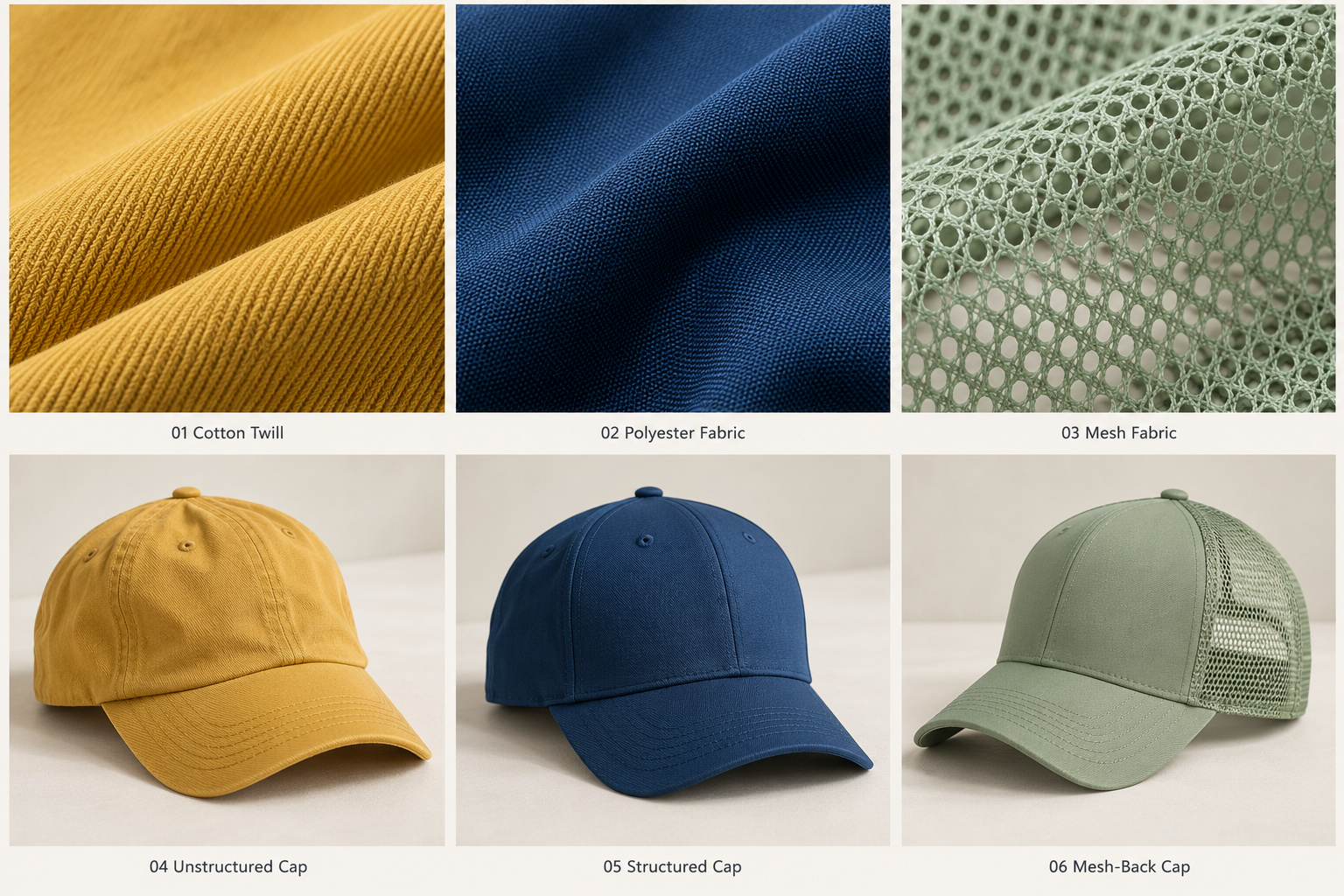
Cotton twill is a starting point for many baseball cap projects, with its diagonal weave and varying weights offering different handles and appearances. A softer fabric and a heavier, firmer twill can produce noticeably different crowns even when their colors are similar.
Polyester fabrics and mesh options are reviewed according to the proposed style. Mesh openness, stability and edge behavior matter at panel joins. State any required composition or weight rather than relying on broad descriptions such as “sports fabric.” Moisture management, water resistance or other performance claims require specific material confirmation and, where needed, separately agreed testing.
 Review Support, Lining and Sweatband Components
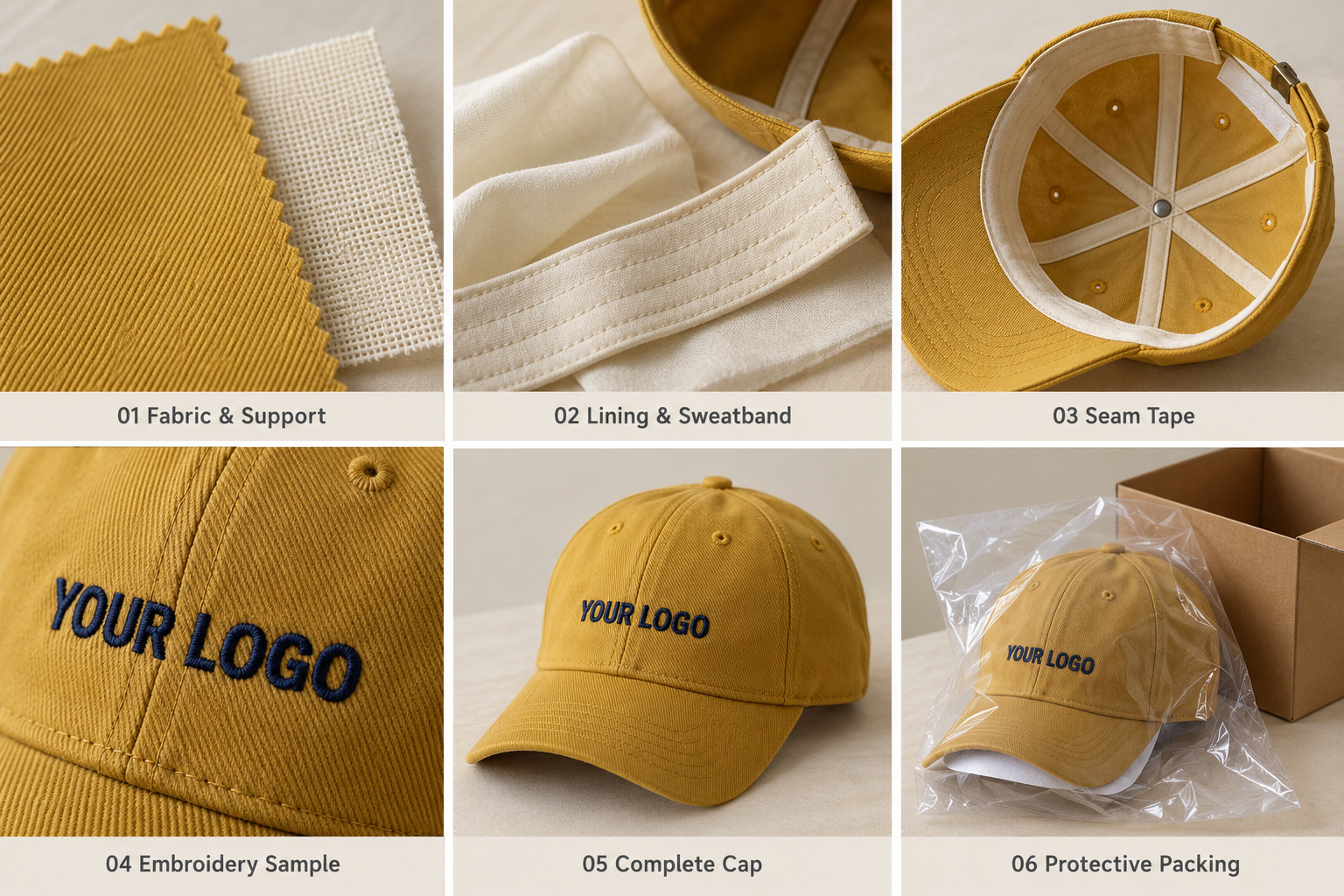
The outer fabric is only part of the material specification. Structured front panels may require supporting material, while lining, seam tape and sweatbands affect the interior finish and wearing feel. These components should be reviewed together with the chosen production partner.
Specify where support is needed and how firm the crown should feel. A reference sample helps distinguish a lightly supported front from a rigid profile. Sweatband thickness and construction can also influence the finished opening, so material substitutions should trigger a fit review. Related choices are covered in our cap structure and brim options.
Check Decoration on the Selected Fabric
Fabric texture and stability affect logo reproduction. Dense embroidery can draw a lightweight panel inward, while open mesh or a textured surface may limit small lettering and fine details. Backing and decoration placement need review against the actual material.
Approve an appropriate stitched proof or decorated sample before release. Our logo and embroidery options explain the artwork information required. A successful proof on one fabric should not automatically approve the same design on a different material.
 Confirm Swatches, Availability and Order Conditions
Identify the material reference, composition, weight where relevant, color and required quantity. Existing material availability and specially sourced options can lead to different minimums, costs and preparation times. We confirm these conditions after reviewing the complete order breakdown.
A physical swatch establishes the proposed texture and handle, but the complete cap sample is needed to assess shape, seams and fit. Record approved materials through the sample development process. Any subsequent substitution should be reviewed before production continues.
Define Material Checks and Packing Requirements
Agreed checks can cover visible fabric defects, shade variation, panel consistency and conformity with approved component references. Appearance checks alone do not verify fiber composition or functional performance. Required documentation, laboratory testing and third-party inspection must be specified separately.
Packing should suit the resulting construction: firm crowns need protection from crushing, and soft caps should avoid unnecessary creasing or pressure on decoration. Send your reference materials, cap design, logo requirements, quantities and destination so we can review feasibility, sampling costs and production timing.