


Establish the Fit Requirements for Your Cap
Capzorva Baseball Cap coordinates size and fit development for apparel brands, importers and wholesale buyers through cooperating production partners. We review your reference cap, measurements and intended wearer group before confirming which adjustments are feasible.
Start by identifying what needs to change: a tighter opening, deeper crown, different adjustment range or revised proportions. A general request such as “larger fit” leaves several construction choices unresolved. Explain where the reference feels too tight, shallow or loose so the sample review addresses the actual requirement.
Define Circumference, Crown Depth and Proportions
Cap circumference should be specified at the intended wearing line, with the closure position recorded. For adjustable styles, distinguish the sample’s measurement at an agreed setting from the usable adjustment range. State units clearly and avoid relying on “one size” without supporting measurements.
Crown depth and panel proportions also influence fit. Increasing circumference alone may leave the crown too shallow, while a deeper crown can change how the cap sits around the ears. Front-panel support, fabric stiffness and sweatband construction should be considered alongside dimensions. Our cap structure and brim options explain related construction decisions.
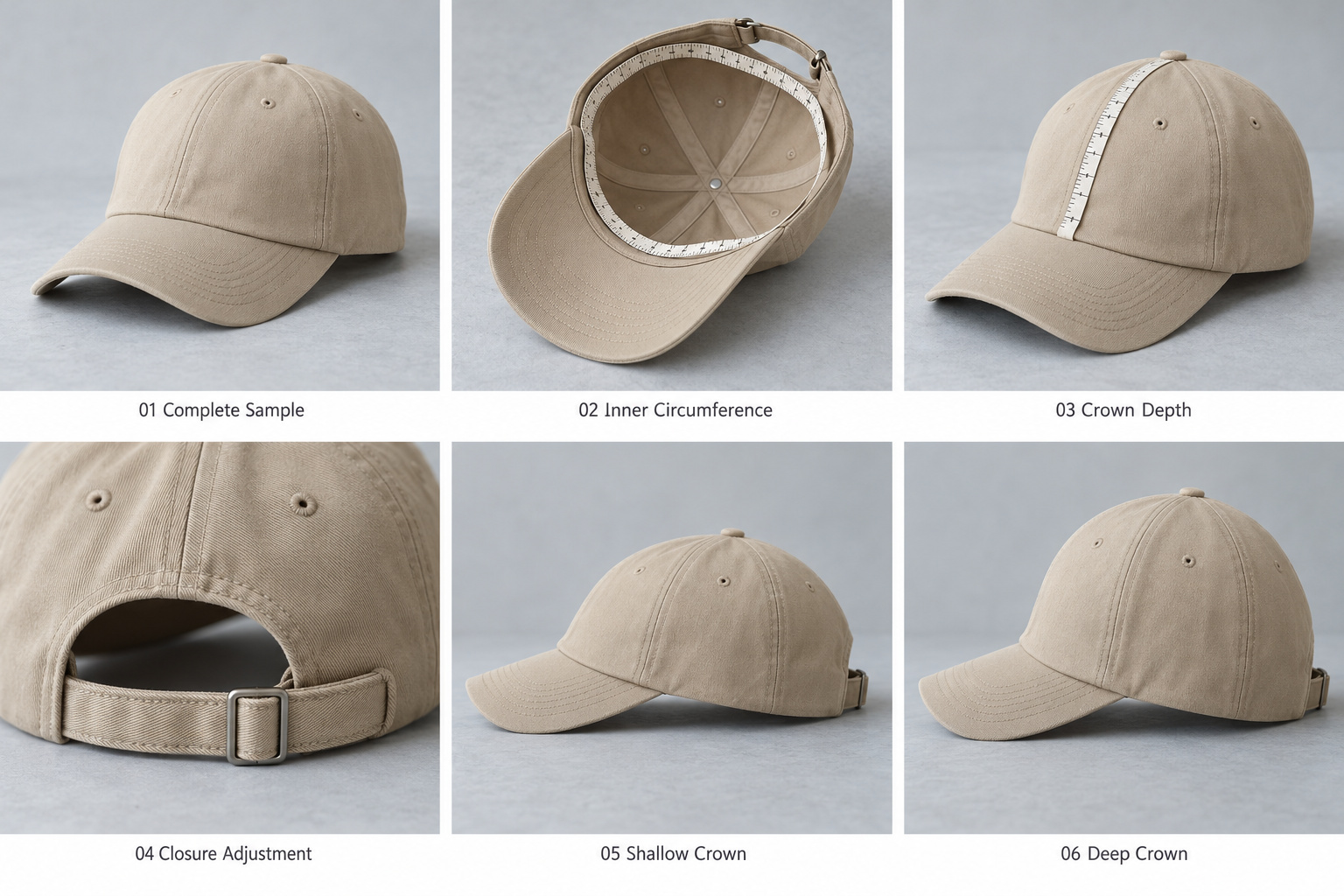 Agree on a Repeatable Measurement Method
Send a measurement sheet showing the points to check and how the cap should be positioned. Indicate whether the closure is open, closed or set to a particular position, and whether the material should remain relaxed during measurement.
A physical reference helps resolve differences that photographs cannot show. We review the measurement method and proposed tolerances with the production partner before sampling. The same method should then be used for sample comments and production checks. Measurements taken under different tension or closure settings can create misleading comparisons.
Select the Closure and Review the Sample Fit
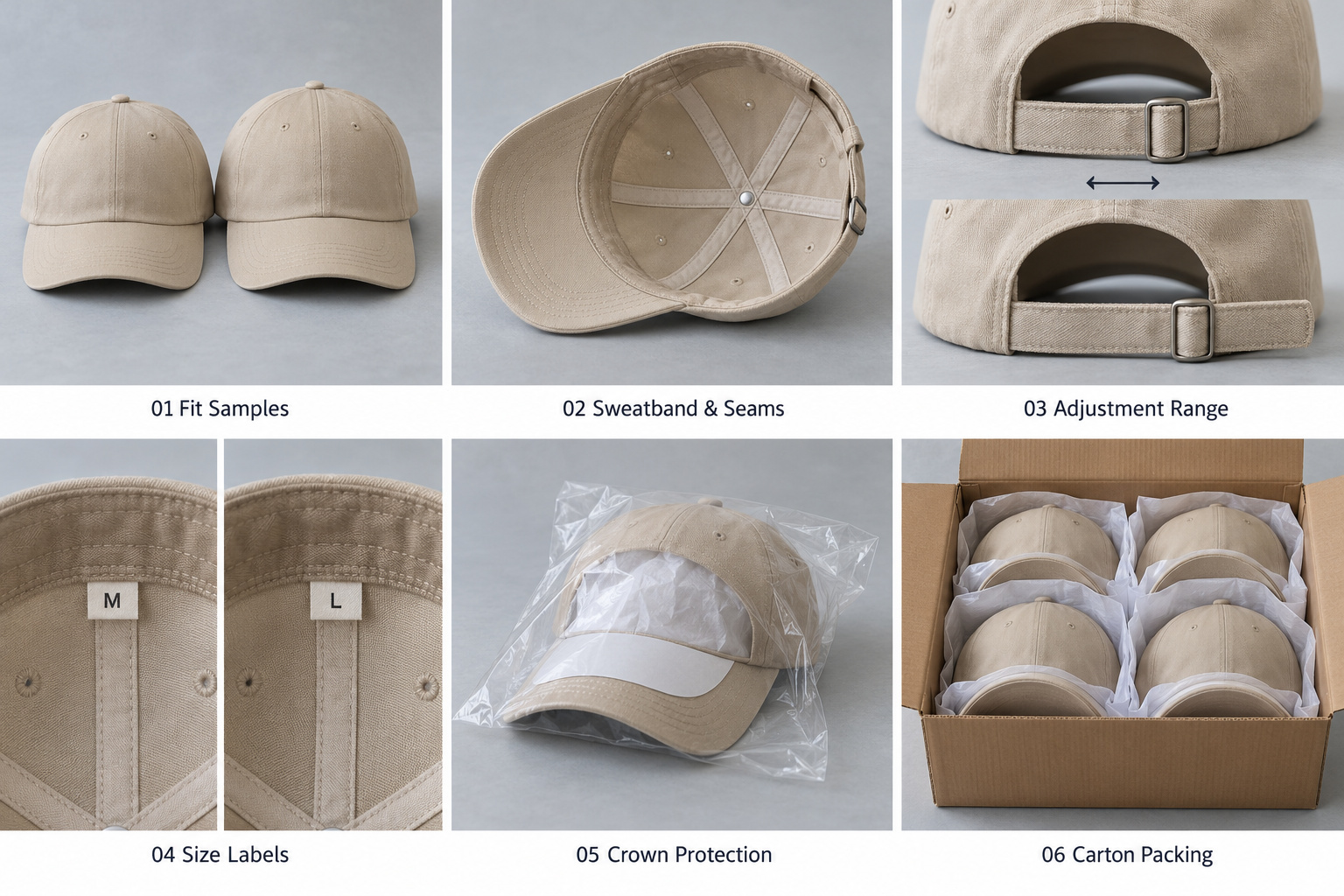
Fabric straps, metal adjusters and plastic snap closures provide different adjustment arrangements. Available range depends on strap length, rear opening and overall construction. An adjustable cap still needs an agreed target fit.
Review the complete sample for wearing position, pressure around the opening, crown depth and closure usability. For children’s orders, provide the intended wearer group, size specification and destination requirements; an age label alone is insufficient. Our sample development process supports confirmation of the complete cap before production.
 Confirm Size Variants, Costs and Timing
Provide quantities for each size, color and design. Separate size patterns, revised components and additional sample rounds can affect development cost, MOQ and scheduling. Small trial quantities are reviewed against the proposed construction rather than accepted under one universal minimum.
Sample charges and timing are confirmed after the required changes are understood. Approve the final dimensions, fit reference and revision record before bulk production is released. Changes after approval require another review of cost and delivery timing.
Check Production Fit and Packing Identification
Production inspection should compare agreed measurements, crown symmetry, sweatband attachment and closure function against the approved specification. The inspection scope and any third-party involvement must be arranged in advance through the quality inspection review.
For multiple sizes, confirm size labels, packing separation and carton identification to reduce receiving errors. Packing should preserve the approved crown and brim shape. Send your reference cap, measurement sheet, requested adjustments, quantity breakdown and delivery destination so we can review a suitable sample and quotation plan.